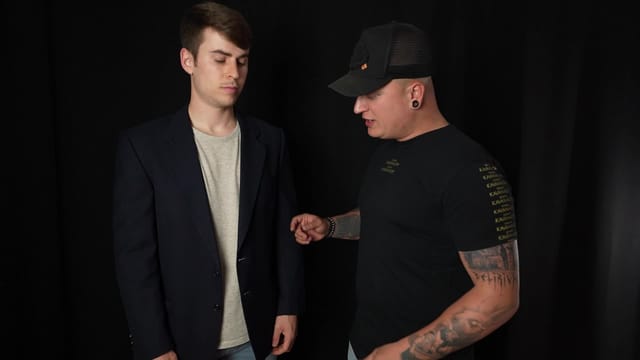
Jacket Pickpocket: Exterior and Interior Pockets
This lesson by Shado El Mago examines various jacket pockets within a pickpocket routine. The explanation combines demonstrations with Julio, comparisons of positions, and commentary on the spectator's attention.
Recognizing the Garment
The tour begins by distinguishing between exterior and interior pockets, as well as different garments. Shado discusses why he prefers an open jacket or suit coat and what possibilities are lost when the garment is closed.
He also introduces differences regarding trouser pockets to frame the choice of volunteer. These are criteria of the handling he develops, without promising that all garments share the same construction.
Two Approaches for the Lower Pocket
The first two tutorials compare a situation where the jacket is opened versus another from the side. Both relate position, contact, and patter; the second requires paying closer attention to the pocket's width and the object it contains.
The explanation distinguishes between wallets, phones, and keys. It covers the grip, the sound, and the need not to treat a fragile object as if it shared the same conditions as a wallet.
Upper and Interior Pockets
The next section examines the upper exterior pocket, using examples of pocket squares and thin objects. Coverages and various possibilities for continuing after the action are compared, including the interaction with another participant.
The final tutorial deals with the interior pocket, which Shado considers more complex. He explains presentation alternatives, changes in the objects' positions, and the specific handling he uses when he decides to work from there.
Continuing the Show
Throughout the lesson, they discuss what the participant sees and what can be shown to the audience, how to keep the hands ready, and how to connect the actions. The handling of objects is integrated into a conversation and is not presented as an isolated sleight.
You will need a jacket or suit coat featuring the pockets you want to study, along with suitable practice props such as a wallet or a pocket square. It is helpful to know the principles of physical, verbal, and visual misdirection. The lesson teaches these jacket scenarios; references to other effects and techniques do not equate to additional complete routines.