Lessons
790 lessons · 1207 videos · 263h of content
 Self-Working
How to Structure and Rehearse a Mentalism Act
Álex Ruiz analyzes the function of each effect within his show and proposes criteria for adapting it. Two videos cover opening, participation, divinations, finale, variety of sensations, and a gradual rehearsal process.
 Advanced
Ball Manipulation: Transfers, Finger Roll and Naturalness
Learn with Borja Montón to link the vanishing and reappearance of a ball through false deposits, transfers and handkerchief handling. Work on body relaxation, coordinated gaze, a roll between the fingers and an anti-gravity move, with details that keep the sequence flowing.
 Beginner
Do As I Do: A Two-Deck Coincidence
A participant mirrors the magician's movements with a separate deck, and both end up revealing the exact same card. Borja Montón teaches the "Do As I Do" routine, four different peeks, and a mirror-themed presentation, complete with ideas for adding humor and leading into the climax.
 Expert
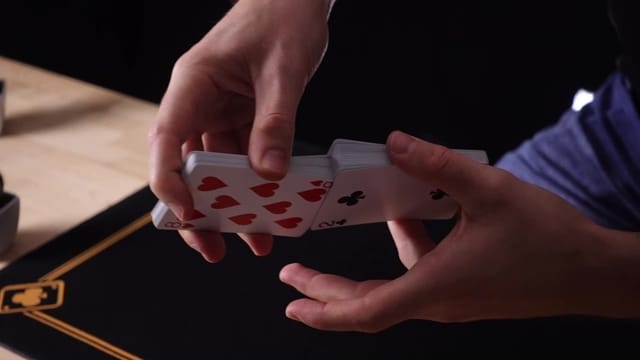
Faro Shuffle: Precise Interweaving and Deck Orientation
Julio Ribera explains how to interweave the cards one by one using the Faro shuffle. He covers the cut, the contact points, pressure, and two handling orientations, taking into account the quality and edge response of the deck.
 Intermediate
Blow Change: Color Change and Dribble Control
A card transforms with a breath of air. Julio Ribera teaches the Blow Change and a dribble control that allows you to set up the effect while the spectator looks at their selection, complete with details on attention, handling, and the finish.
 Intermediate
Instagram Social Media Force
Julio Montoro explains an image force using the spectator's Instagram and a photograph taken before the choice. It uses two phones and the Saved feature as recorded. You must check that behaviour in the version you intend to use.
 Intermediate
The Spectator's Memory: Construction and Recollection of the Effect
Roberto Giobbi analyzes five strategies to build the recollection of a trick: adding, anchoring, changing, erasing, and shifting information. He applies them to spellers, shuffles, controls, and spectator participation. The bonus video features a bibliographical reference to dive deeper into magic theory.
 Self-Working
Cardtoon: Animation and Card Revelation
The drawing of a little magician comes to life and reveals the named card. Julio Ribera explains how Cardtoon works, the preparation of the revelation, and two ways to handle the cards to build the animation.
 Intermediate
Making a Nail Writer and practicing writing
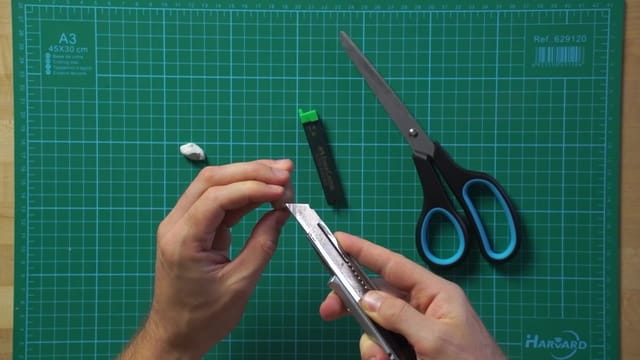
Julio Ribera teaches how to make a Nail Writer using a thumb tip and then explains how to write with it. It covers materials, adjustment, cover, pocket preparation, and exercises to practice letters, words, and numbers without looking.
 Beginner
Cutting to the Aces: Clarity and Spectator Management
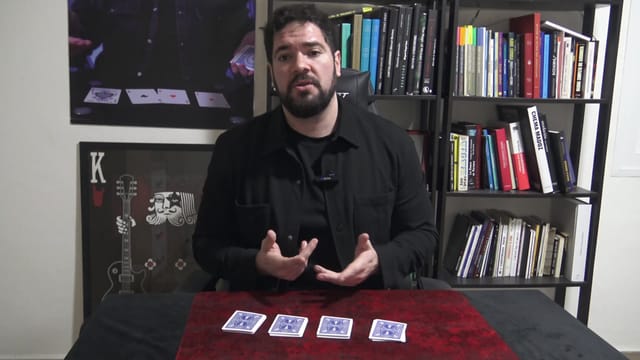
Luis Olmedo presents his version of a classic opening where the spectator cuts four packets to produce the Aces. He explains the set-up, instructions, cover, and final image.
 Advanced
Acrobatic cards: reversals with a small packet
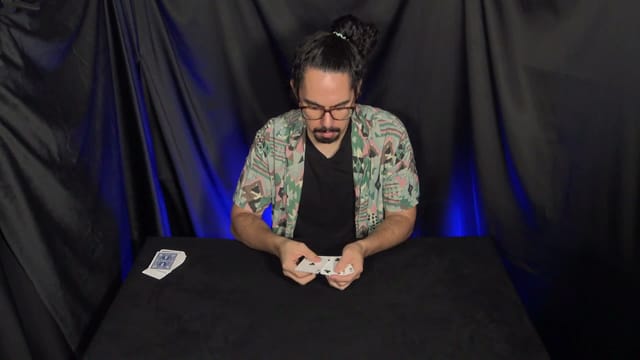
Elías D’Sastre teaches a routine in which the ace, two, three and four change orientation while the spectator tries to retain the memory of a selected card. Learn the setup, counts and packet handling, with attention to rhythm, pauses and angles.
 Intermediate
United: two signed halves that join together
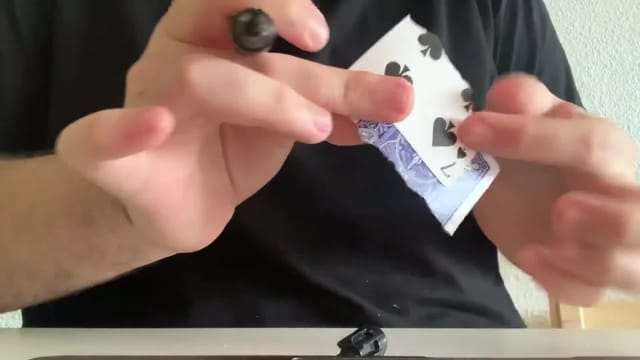
Julio Montoro teaches how to build and perform United: a card appears to be torn in half, the halves receive signatures and end up joined together into a souvenir that the spectator keeps. It includes the preparation of the gimmick, deck handling, and the performance for a single spectator or a couple.