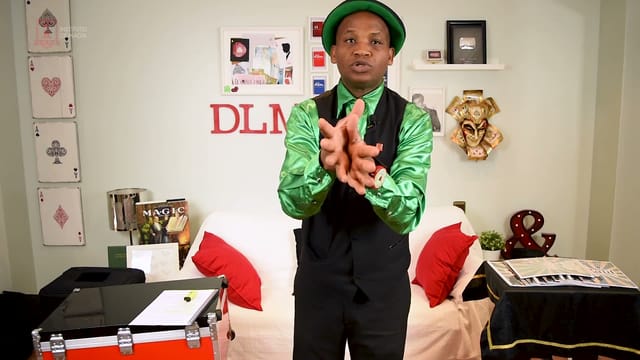
Street Magic: Gathering Crowds, Audience Management, and Passing the Hat
This lecture covers the work of the street magician who gathers a circle of spectators and performs a show in exchange for contributions thrown into the hat. Raúl Camagüey shares decisions from his professional practice: how to start drawing people in, organize the space, maintain attention, prepare the equipment, and keep the show flowing while collecting money.
The teaching is supported by demonstrations of his props, a performance excerpt, and questions from Borja Montón. The core focus is the relationship between the audience, presentation, and working conditions. The tricks serve as examples to study their function within the show and the adjustments needed when performing surrounded.
Gathering Crowds and Space Organization
Raúl explains how he begins setting up his pitch while talking and observing who starts to take an interest. He analyzes vocal projection, his opening lines, and the exact moment to transition from drawing a crowd to starting the show. Wardrobe helps ensure that people can identify an artist from a distance.
He demonstrates his method for marking the circle's boundary with a chalk or water line and positioning the first spectators. He discusses initial distances, the working space he needs, and gradually closing in as trust is established. The speaker also explains under what conditions he stops using this boundary resource.
The study connects the group's shape with audience attention and the end of the show. The goal is to avoid a scattered crowd and maintain a recognizable space without losing the ability to draw people in closer later. The final questions revisit the barrier created by a boundary line and how its role shifts during the performance.
Equipment, Wardrobe, and Transport
He explains the evolution of his case and table into a compact, detachable, and easily transportable setup. Raúl shows how he stores the tripod, why he minimizes bulk, and what function being able to rotate the case serves while working.
Wardrobe is analyzed as a tool for visibility and identification. He discusses color combinations, personal grooming, and the coherence between his hat, clothing, and footwear. Image is tied both to gathering a crowd and to the possibility of being booked for another event.
The equipment includes a carrying case or bag that protects the table and helps organize props. He shows examples of lettering and stands used to make his name and contact info visible. Each item is evaluated by its practical utility during transport, setup, and teardown.
The Hat in the Show
The hat doesn't just appear at the very end: Raúl explains how he incorporates it from the early effects and keeps it present without constantly halting the show. A sudden rain shower gives him the opportunity to analyze what happens when people have to leave before the finale.
He examines the height and placement of the hat to make it accessible to people of all ages. The speaker shows his stand and how the sound of dropping coins contributes to the atmosphere of the show.
He also presents visual and verbal gags to remind the audience that tips are appreciated, such as a miniature top hat or a fake payment scenario. He discusses how to keep up the humor and move forward with the show rather than turning every bit into a direct pitch.
Passing the hat by hand gets a dedicated explanation: when to start it, how to work the circle, making eye contact with people, and keeping a point of interest anchored near the table. He discusses the flow of the route and how to transition back to the main action. The financial figures he mentions are from his personal career, not a fixed guarantee of the method.
Performing at 360 Degrees
The lecture stresses treating the entire circle as the front of your performance area. He demonstrates ways to shift orientation, address those standing in the back, and integrate people from different angles while an assistant performs an action.
Raúl ties the placement of his props to viewing angles. He explains the use of bags and pouches to keep accessories ready and concealed until they are needed, and how to pack them away smoothly afterward.
He demonstrates adaptations of the Linking Rings, nesting boxes, and a vanishing bottle. For the boxes, he discusses how to streamline the handling and give purpose to the containers; for the bottle, he analyzes how long to leave the prop exposed and when to produce it. These are examples of organization and environmental adaptation, not complete masterclasses on those specific routines.
Opening, Closing, and Attention
The choice of repertoire is tied to the structure of the show. The opener must quickly give the audience a reason to stay; the closer maintains a focal point while the finale is set up and the hat is passed. Raúl shares his usual format of few effects and a contained runtime for busking.
The closing example uses a selected card, a spectator helping to shuffle, and a card under a coin. He illustrates the coordination of his patter, working the crowd, returning to the table, and the final revelation. He points out a Top Change used within that sequence; the main focus is on the scene's structure, not a technical tutorial on the trick itself.
The study covers the moment to express gratitude, dismiss the helper, and pack up the gear without abruptly severing the connection with the audience. Contact info is made visible once again during this wrap-up.
Location, Voice, and Unexpected Situations
Raúl suggests starting in manageable spaces and scaling up once you gain experience in gathering crowds. He shares his preference for side areas, how to work with foot traffic, and the support he relies on for voice projection. He explains why he trained in theater to develop his vocal delivery.
References to permits and police are part of his stories regarding working conditions across different eras and locations. The lecture reflects his personal experiences in that environment and his recommendation to always work legally.
He also covers how to respond to noise, vehicles, and interrupting spectators. Raúl shows how to acknowledge a distraction, briefly incorporate it, and regain control of the audience's attention. If a situation spirals out of control, he suggests cutting the show short before the audience realizes how long it was originally supposed to last.
The final questions touch on shyness, adapting humor to the context, and preparing local or topical references. He contrasts the persona and material he uses on the street with what he would choose for a private party.
Application and Materials
To develop this format, it's best to start with a small, well-mastered repertoire and practice crowd-gathering, transitions, and the close. The lecture is designed to help you apply these tricks to a shifting audience and practice communication, space management, and work organization.
The resources shown include a case or working table, a detachable stand, a hat with its support, prop bags, visible stage wardrobe, and contact or promotional displays. The boundary line and various gags are optional tools from his setup, not mandatory accessories that must all be used at once. The specific demonstrations feature a deck of cards, a coin, rings, boxes, and a bottle as examples.