Mockingbird
Master the Fluidity of Mockingbird
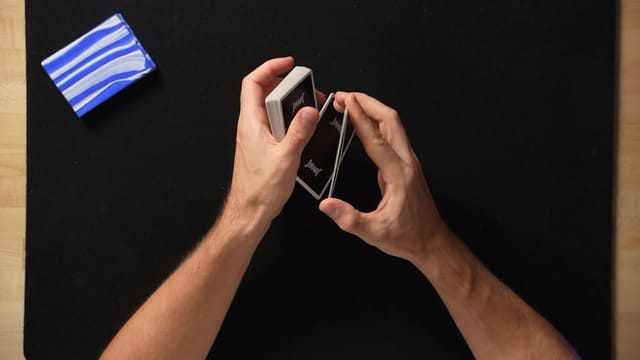
Mockingbird is a flourish that makes a deck of cards look like it’s dancing. Once you learn it, you can show off your dexterity with a series of smooth, spinning packet rotations. It is a visual way to demonstrate total control over the deck, making it perfect for those moments when you want to catch someone's eye without saying a word.
How Mockingbird is Taught
Julio Ribera breaks this move down into small, manageable steps. He starts by showing you how to split the deck into the right-sized packets—usually five to seven cards each. He explains exactly where your pinky and thumb need to sit on the corners to keep the cards from flying apart. You’ll see how to use your ring and index fingers to drive the rotations until the whole move feels like one continuous, fluid motion.
What Level Is This For?
This is an intermediate cardistry move. You don't need to be a pro, but you should be comfortable holding several small packets of cards at once. Julio teaches the move using a standard deck so you can easily track the face-up and face-down positions, but he also mentions how cardistry planks can help you focus on the spin. Expect to spend a few days practicing the finger transitions to get it looking smooth.
About Julio Ribera
Julio Ribera is a master of modern card magic and cardistry with over 1.5 million followers online. He is known for his ability to take complex sleights and flourishes and explain them in a way that anyone can follow. His teaching focuses on the physical mechanics—where your fingers go and how they move—to help you learn faster.
What's Included
- Choosing the right packet size for your hands
- The pinky and thumb corner grip
- Ring finger rotation mechanics
- Index finger half-turns and full-turns
- How to smoothly collapse the packets back into the hand
Frequently Asked Questions
How long until I can actually do this?
You can learn the basic mechanics in about an hour. However, getting the "Mockingbird" to look fluid and effortless usually takes a few days of consistent practice.
What if I have small hands?
Julio suggests using smaller packets, around five cards each. This makes the stretches and rotations much easier to manage if your reach is shorter.
Is this easier with certain cards?
Standard playing cards work great. If you find the cards are sliding or getting messy, you can practice with cardistry planks to master the spinning motion first.
Can I learn this without a teacher watching?
Yes. Julio shows the move from multiple angles, including the front and the performer's view, so you can match your finger placements exactly to his.