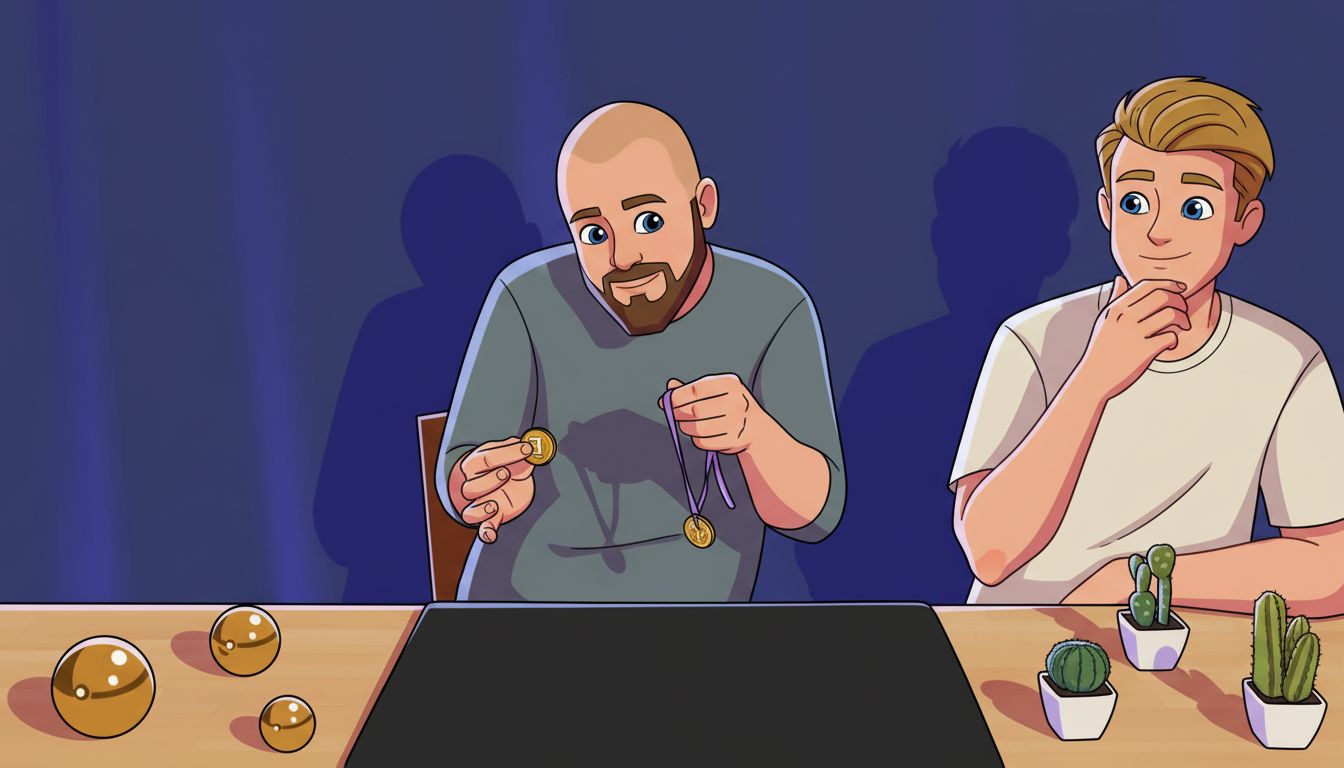
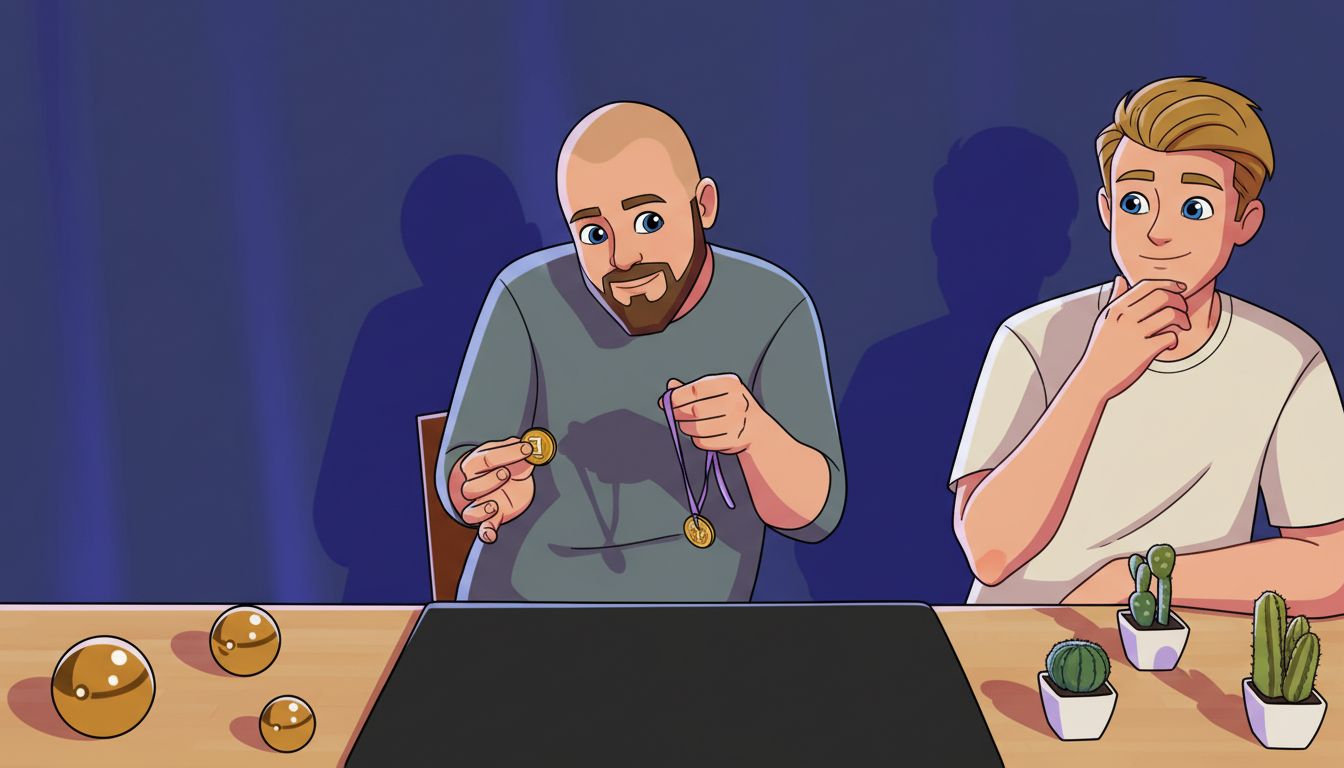
Charming Chinese Challenge with Yago Turia

Escapes and links with Chinese coins and a ribbon featuring Yago Turia. Five lessons and fourteen videos develop a routine with an extra coin, another with three coins, visual links, and escapes with spectator participation.
Charming Chinese Challenge with Yago Turia
Escapes and links with Chinese coins and a ribbon featuring Yago Turia. Five lessons and fourteen videos develop a routine with an extra coin, another with three coins, visual links, and escapes with spectator participation.
By Yago Turia
5 Lessons



Yago Turia develops various solutions to make Chinese coins and a ribbon appear to link and unlink. The course brings together five lessons and fourteen videos, featuring performances, explanations, reviews, and handling details.
The conditions change depending on the version: there is seated work with lapping, a routine without an additional coin, a link adaptation without lapping, and escapes where the audience holds the ribbon.
Routine with an extra coin
The first lesson requires four Chinese coins and a ribbon. It teaches three escapes, a visual link, and a finale that brings the magic right into the spectator's hand.
The explanation is accompanied by an extensive review of the toss to the lap, paying attention to height, distance, sound, and reception. A fourth video adds an adjustment to the final sequence and its retrieval.
This version is designed to be performed seated at a table. The extra coin is just a regular coin from the set, not a special gimmick.
A three-coin version
The second routine uses three coins and a satin ribbon, without a fourth coin. It covers the Click Pass, finger palm, grips, and three releases with different handlings.
Pressure, friction, and tilt allow you to study the image of the coins at your fingertips. The final escape is more technical and is accompanied by a reference to the material Yago says he learned it from.
The explanation includes a review of the complete routine and a patter tip to cover the setup for the final phase.
Visual links and conditions
The next lesson develops a double link with four coins and lapping work. Afterward, it explains an adaptation without lapping that starts from a position in the extra-coin handling.
The two explanations have different scopes: the first builds a two-link sequence; the second adapts the link of a specific phase. An exercise using a pen or a small stick helps practice the coordination of the toss and reception.
Escapes with the ribbon held by the spectator
Two methods utilize the help of one or two participants to hold the ends of the ribbon. A slip solution and a tension solution are taught.
Audience participation consists of holding the ribbon. Instructions on how to hand it over, the tension, and the continuity of the gesture are all part of the explanations.
The course ends with a classic coin release from the ribbon. Yago discusses its usual application with rings and the effect of the coin's thickness, while the demonstration and handling taught are performed with a coin.
Materials and how to study
The main materials are Chinese coins with holes and a ribbon that allows them to be threaded. The routine with the extra coin and the double link specify four coins; the second routine uses three. The final escapes can be practiced with a single coin and ribbon.
Yago explains how to choose an initial ribbon length and adapt it to the handling. The reference to satin ribbon is haberdashery material, without requiring a specific brand or magic kit.
You will need a table and a seated position for the solutions that use lapping. The variations without that discharge have their own starting positions and are distinguished in the notes. The pen is a practice aid, not a mandatory prop for the effect.
It is advisable to work on the finger palm, French Drop, pressure, hand coordination, and gathering the ribbon. The explanations show how these resources apply to each version. References to other authors or audiovisual materials credit Yago's learning process, without implying any necessary new purchases or replacing the limits of the content taught here.