

Your first mentalism show with Álex Ruiz

Álex Ruiz develops a roughly half-hour mentalism session as a working model. Seven lessons and thirteen videos cover the fundamentals, a live performance with an audience, four effects, and criteria for structure, presentation, and rehearsal.
Your first mentalism show with Álex Ruiz
Álex Ruiz develops a roughly half-hour mentalism session as a working model. Seven lessons and thirteen videos cover the fundamentals, a live performance with an audience, four effects, and criteria for structure, presentation, and rehearsal.
By Alex Ruiz Mentalista
7 Lessons

Fundamentals of Mentalism: Character and Materials

Álex Ruiz: Full Mentalism Performance

Russian roulette with bags: decisions and magician's choice

Sneak Thief: Drawings and Pseudopsychometry

Name and Desire: Double Envelope Divination
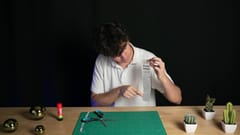
Newspaper Prediction: Preparation and Revelation

How to Structure and Rehearse a Mentalism Act
Building a show means deciding what each effect communicates, what feeling it produces, and how it connects to the next one. Álex Ruiz uses a roughly half-hour show as a model for working through these decisions, featuring his complete performance, the methods for four effects, and an analysis of the structure.
The journey comprises seven lessons and thirteen videos. It combines theory, preparation, handling, audience interaction, and tips for rehearsing your own version.
Character, materials, and approach
The first lesson groups together a welcome, an interview with Julio Ribera, the inventory of materials, and two classes on verisimilitude and character. It explores what the mentalist claims to do, what backstory supports him, and how to maintain coherence between that story and his effects.
The inventory uses everyday stationery and general store items. The materials are later tied to the specific preparation of each routine.
A performance from start to finish
The second lesson lets you follow the complete show before a live audience: a choice with bags, drawings from several participants, two personal divinations, and a newspaper prediction.
The theme of decisions appears at the beginning and returns at the close. An envelope handed out at the start keeps the promise of the ending present throughout.
This recording demonstrates timing, interactions, instructions, and transitions. The performance is kept distinct from the technical explanations that break down the effects.
An opening with bags
Álex explains an opening based on two bags marked A and B and a verbal force. Possible responses, recap strategies, and the thematic coherence of the presentation on decisions are all explored.
The recorded setup includes sharp props, and format adaptations are discussed. The lesson description covers the verbal technique and the props that appear in that explanation.
Sneak Thief
Four participants draw on cards, and the mentalist attributes the images to their respective authors before reproducing the final drawing. The explanation covers preparation, dealing, collecting, and information handling.
Marking alternatives using plain or lined cards are shown. The marking punch is presented as one option among several, and a pacing modification is studied that groups two attributions together to break the linear progression.
A name and a desire
The envelope routine is accompanied by a class on the divination process. It covers how to spread a revelation across multiple moments, use confirmations and silences, and show the result to the audience before the participant.
The practical version uses two opaque envelopes and cards to reveal a name and a desire. The sequence and the one-ahead principle are explained, with references to Bob Cassidy's Name and Place and ideas by Peter Turner and Marc Paul.
This handling presupposes a double lift with cards and the pinky break used to set it up. The hypnosis scene in the performance is optional: it is suggested to present the second thought through a visualization exercise with closed eyes.
The newspaper prediction
The finale uses a prepared column and a written prediction. The choice of column, its preparation, the conditions of the cut zone, and the participant's reading are all examined.
Álex also details a progressive revelation on a large sheet of paper, which distributes the text across multiple moments. The fabrication of the prop is tied directly to its stage presentation.
Understanding order and rehearsing
The final lesson explains the functions of the opening, cooperative participation, the core divination sequence, and the grand finale. It analyzes how to vary pacing and feelings, and where another effect might fit.
It also distinguishes between a concert-style show, a plot-driven show, and a thematic show. Álex's model maintains a thread between the entrance and the close, allowing more freedom in the middle section.
The final tips suggest working on effects separately, road-testing the session, and reviewing scripts, music, and personality. The additional effects cited serve to study potential functions without turning into extra tutorials.
Materials and prior knowledge
The inventory includes bags, a sponge, and a knife for the opening; cards, envelopes, and pens for the divinations; and a newspaper, glue, scissors, paper, and an envelope for the prediction. The marking tool has alternatives, and the utility knife is mentioned as optional for one of them.
The goal is to understand the construction and practice the handlings before putting them together. The envelope routine requires the double lift; the lesson descriptions detail its other material and presentation requirements.
References to psychology, psychic faculties, or suggestion are worked into the characters and presentations of the show. The instruction focuses on the handling of the effects, narrative coherence, and the rehearsal process.