Cardistry flourishes: cuts, spins, and shapes

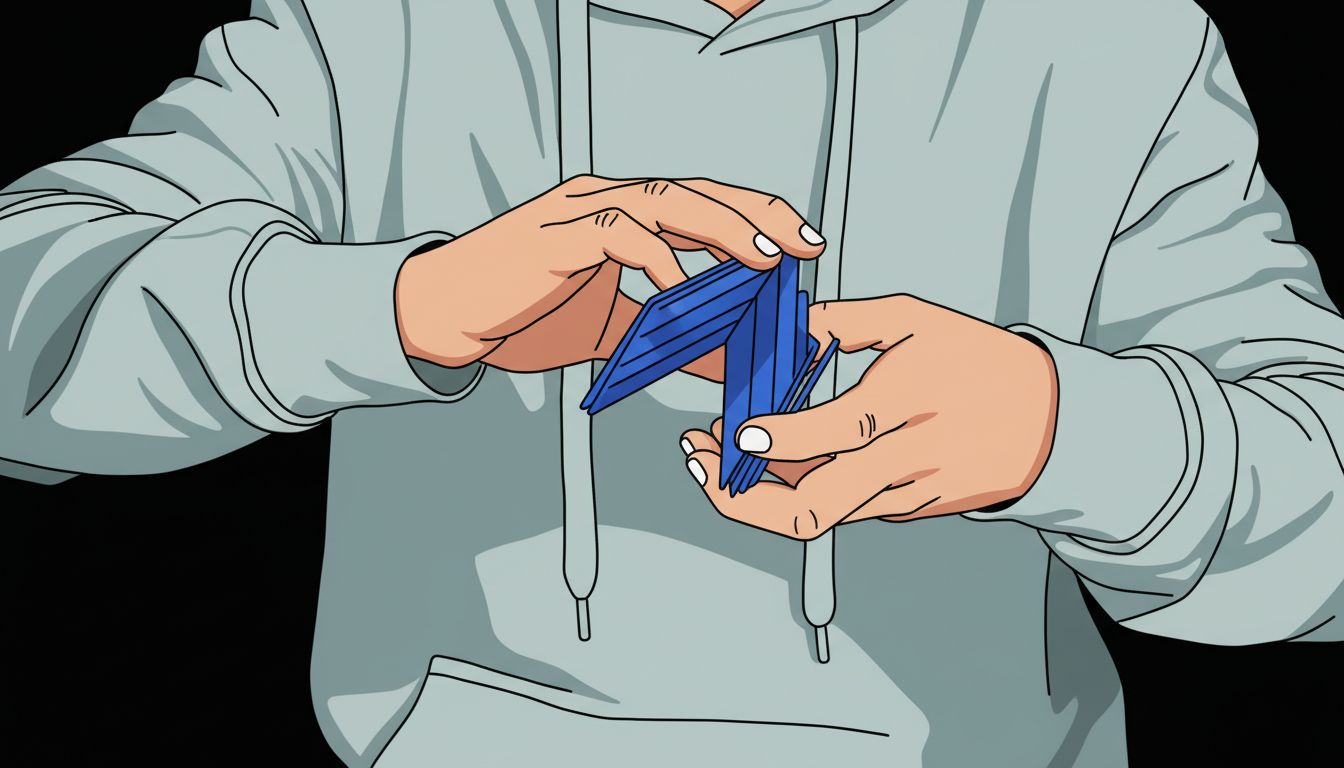
Six flourishes explained by Julio Ribera: Silk, Sky Cross, Autómata, Delta, Jumble, and El cuadrado mágico. Practice openings, grips, pivots, and closures, paying close attention to two-handed coordination and the visual form of each movement.
Cardistry flourishes: cuts, spins, and shapes
Six flourishes explained by Julio Ribera: Silk, Sky Cross, Autómata, Delta, Jumble, and El cuadrado mágico. Practice openings, grips, pivots, and closures, paying close attention to two-handed coordination and the visual form of each movement.
6 Lessons
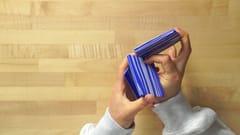
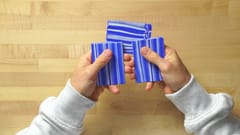
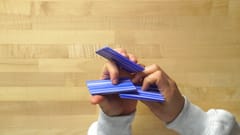

Julio Ribera teaches six cardistry moves with a deck of cards. Each lesson contains an instructional video dedicated to a single flourish, covering everything from the opening and grip changes to transitions and the closure. The learning path brings together packet cuts, spins, geometric shapes, and finales that rely on gravity or a controlled push.
The movements, in the order of the learning path
- Silk. A sequence of openings and pivots where the packets end up collapsing together. Focuses on the smooth continuity of grip changes and the momentum that gives the closure its character.
- Sky Cross. A cross-shaped figure that links a scissor cut, the displacement of a packet, and a circular closure. The explanation pays close attention to ensuring the hands form the shape without interrupting the flow of motion.
- Autómata. A packet movement featuring rotations and a final spin. The tutorial builds on a familiar double Z-cut opening and develops the necessary pinches and transfers to keep going.
- Delta. An opening based on the start of the Erdnase cut in both hands, followed by slides, drops in opposite directions, and a pivot-based closure. The video reviews the specific part of the Erdnase cut that is used.
- Jumble. A combination of straddle grip and biddle grip, featuring support changes, spins, and a closure where the packets come together via gravity.
- El cuadrado mágico. A flourish where figures appear and transform. The explanation separates the work of both hands before bringing together the triangle, the rhombus, and the two squares of the sequence.
What you will work on when practicing them
The explanations focus on controlling the packets as their pivot points change. Julio goes over how to release fingers, maintain the necessary pinches, orient your wrists, and link the end of one action directly into the start of the next. Closures are taught as an integral part of every movement.
Cardistry vocabulary such as straddle grip, biddle grip, Z-cut, and scissor cut is used throughout. The lesson notes indicate the fundamental skills involved and when a video builds upon prior knowledge. You will need a deck of cards to practice. For Silk, trainers are mentioned as an optional aid to help reposition packets.