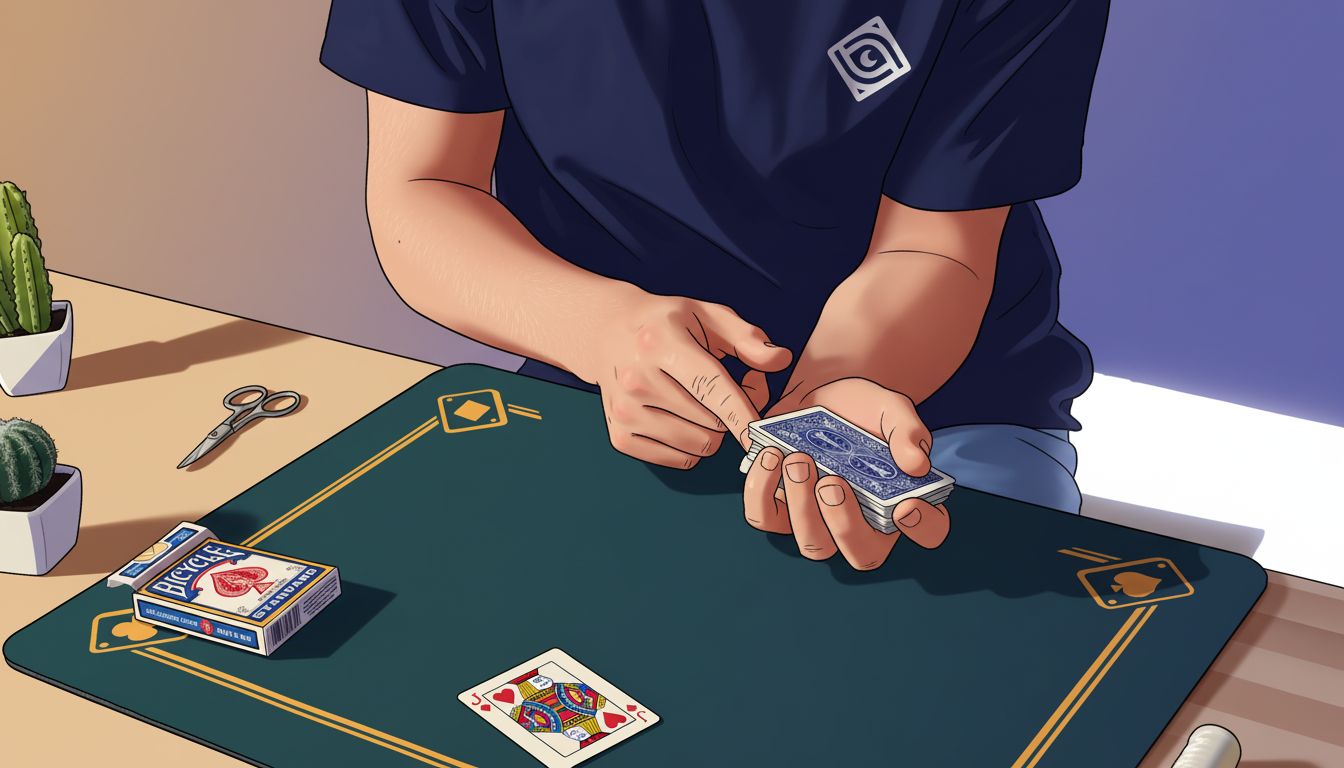
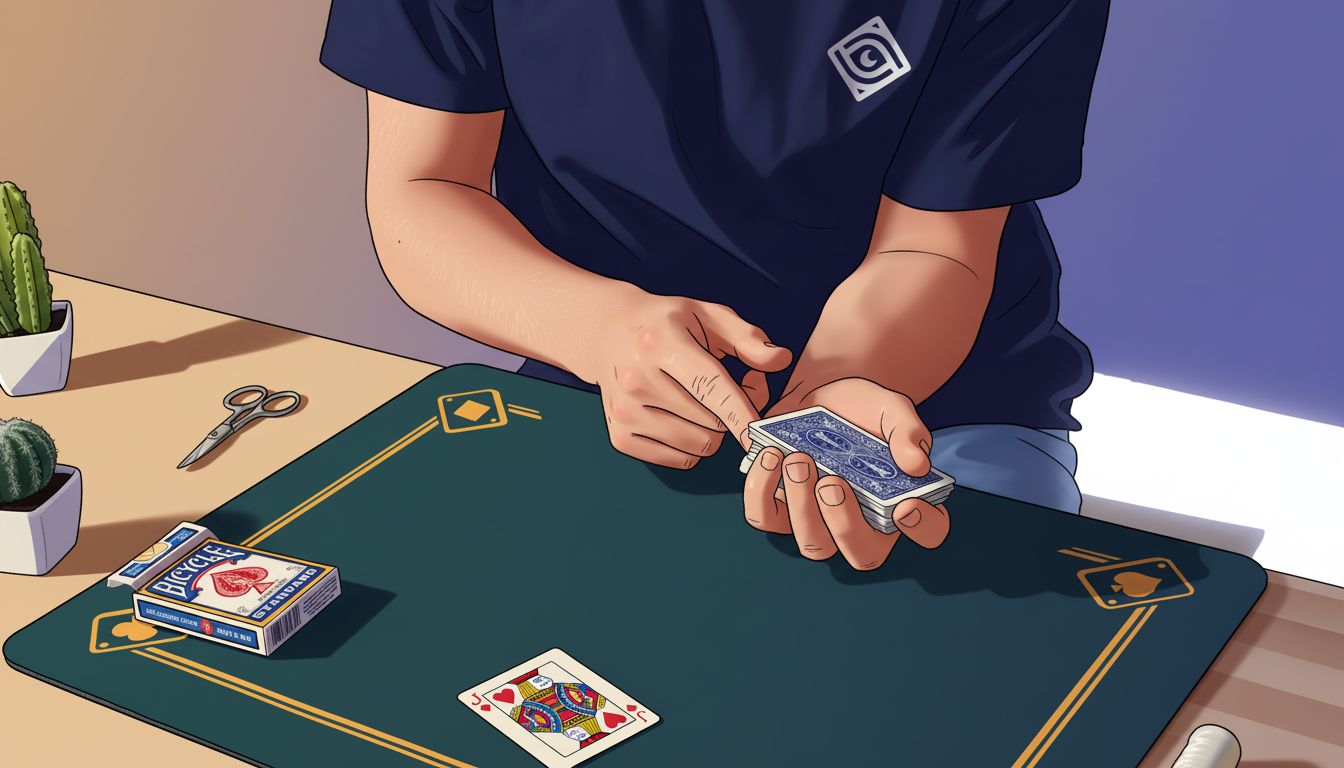
Rising Card: Homemade Construction and Live Performance

Julio Ribera's complete explanation for making a chosen card rise from the card case held by a spectator. Learn how to construct the gimmick using clear elastic thread, handle the routine, remove the setup, and perform two table variants.
Rising Card: Homemade Construction and Live Performance
Julio Ribera's complete explanation for making a chosen card rise from the card case held by a spectator. Learn how to construct the gimmick using clear elastic thread, handle the routine, remove the setup, and perform two table variants.
This path features the demonstration and complete tutorial for a homemade Rising Card by Julio Ribera. The selected card rises from the card case while held by a participant, and the tutorial covers the materials, technical handling, and instructions that make this moment possible.
From Ordinary Materials to Gimmick Construction
The lesson explains how to prepare the setup using a standard deck and clear elastic sewing thread. We cover knotting, tensioning, trimming, and response testing, as well as the necessary clearance inside the case. The thread brand shown is just an example, and cutting the flaps of the case is optional.
From Handling to Audience Participation
The course includes false shuffles that preserve the setup, card selection, and two ways to obtain a break: riffling and the Buckle. Next, we study the Swing Cut, card placement, and pressure control before inserting the deck into the case.
The performance with participants shows how the case is handed out and how the instructions to squeeze and relax the fingers accompany the rise. The explanation also demonstrates how to remove the card without exposing the gimmick.
Continuity and Variations
Several methods for removing the setup are covered so you can continue using the deck. The final section adds a climax during a ribbon spread on the table and another via a dribble, both using the same principle.
You will need a deck of cards, a card case, clear elastic thread, and scissors. It is helpful to know basic grips, the Swing Cut, and how to maintain a break. This path contains an extensive lesson going from construction to these three presentations of the effect, requiring practice with adjustments and coordination.