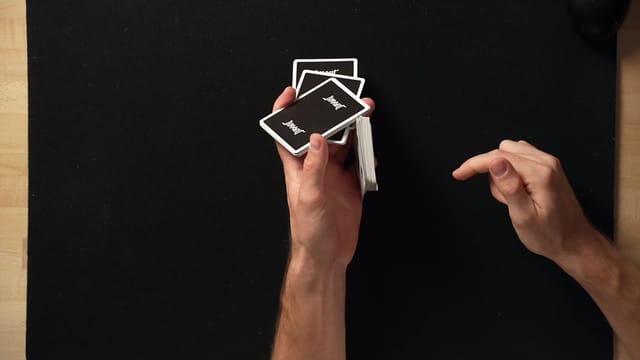
Re-Trigger Cardistry Flourish
Master the Infinite Loop
Imagine sitting with friends and casually spinning a packet of cards through your fingers in a never-ending loop. Re-Trigger takes a standard flourish and turns it into a rhythmic, visual display of skill that you can keep going as long as you want. It’s the kind of move that makes people stop and watch your hands without you saying a word.
How You'll Learn the Move
Julio Ribera breaks this down by focusing on the mechanics of the "feel." You'll start with the basic Trigger position and learn how to adjust your thumb to peel off individual packets. He explains the exact angles you need—like why keeping the packet horizontal is better than vertical—so you don't get stuck. The instruction is practical, showing you how to troubleshoot the grip so the cards don't split or fall.
What Level Is This For?
This is an intermediate cardistry move. You should already be comfortable with the basic "Trigger" flourish before trying this, as Re-Trigger builds directly on that foundation. It requires a bit of finger dexterity and "knack," but Julio’s tip about using cardistry trainers (wooden or plastic blocks) can help you skip the frustration of dropping cards while you're still learning the grip.
About the Instructor
Julio Ribera is a Spanish magician and cardist who has taught millions of people through his online platforms. He’s known for a "learning by doing" style, focusing on the physics of the cards rather than just abstract theory. He specializes in making complex-looking flourishes feel achievable for the everyday hobbyist.
What's Included
- The proper Straddle Grip for cardistry
- How to transition from a single spin into a loop
- Thumb positioning for separating small packets
- The secret to "horizontal contact" for smoother motion
- Tips for using cardistry trainers to speed up your practice
- Ideas for combining Re-Trigger with other flourishes
Frequently Asked Questions
How long until I can do this smoothly?
If you already know the basic Trigger move, you can get the mechanics down in an afternoon. To make it look fluid and "infinite," expect to spend a week or two fidgeting with a deck while you watch TV.
Do I need big hands for this?
Not necessarily. Since you're breaking the deck into smaller packets, it's more about the flexibility of your thumb and the angle of the cards than the actual size of your palm.
Is it better to learn with a old or new deck?
A newer, "slippery" deck is usually better for cardistry flourishes like this. However, Julio recommends using cardistry blocks (trainers) if you find the cards are sliding out of your grip too easily at the start.
Can I do this with a borrowed deck?
Yes, as long as the cards aren't extremely sticky or warped. It’s a completely impromptu move that requires no setup.