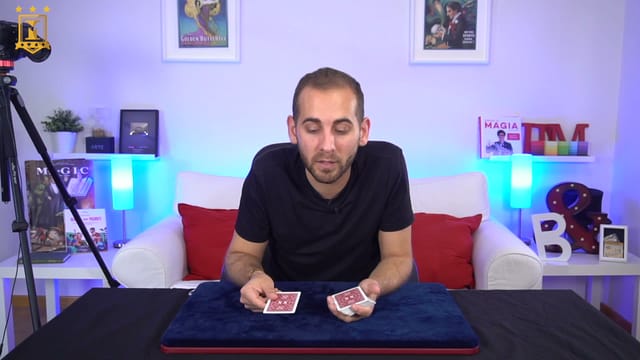
Classic Pass and Herrmann Pass: Technique and Card at Any Number
Víctor Piña explores the pass as a utility sleight to switch the positions of two packets of cards and apply it to controlling a selection. He covers the classic pass, a Herrmann-style variation, and a card at any number routine featuring a prediction. The analysis combines mechanics, cover, and the construction of the effect.
What the Spectator Should Perceive
The explanation begins with Ascanio's distinction between a false sleight and a secret move. A false count or a double lift presents a visible action that must look convincing; a secret move also requires choosing a moment when attention is drawn elsewhere.
The pass is a great way to study this difference. We compare an action naturally integrated into squaring up a spread with a packet shift that must fly under the radar. Timing, patter, and misdirection are worked on alongside hand placement. Solid technical handling remains essential to cover anyone watching the cards during the move.
Classic Pass
He details how to maintain a break, distribute the grip of the packets between both hands, and coordinate their movement. Special attention is given to the pinky's entry, the cooperative work of the fingers, and the contact that helps maintain front cover.
Analyzing pressures reveals how to leverage one packet against the other and the spring-like function of the thumb. The sequence is broken down slowly to understand the path of travel before chasing speed.
A variation in the placement of the index finger is also introduced. Víctor compares front cover and the speed he aims for depending on the audience's viewing angles. These decisions require checking the exact performance angles and tailoring the handling to your own hands.
Herrmann Pass Variation
The second part covers a pass where the bottom packet goes to the top. We study a deep grip, diagonal pressure, the movement of both hands, and thumb contact as a reference point throughout the move.
The tilt of the packets and the return to a natural position are part of the cover. The handling flows smoothly into the squaring gesture after a ripple or while gesturing with the cards. The goal is fluidity and minimal tension; you must master the coordination of each phase before linking them together.
The LePaul pass is brought up for comparison during a spread. The detailed study focuses mainly on the classic pass and the Herrmann variation taught in the class.
Card at Any Number with Prediction
The routine kicks off with a written prediction and a number named by a spectator. After counting down to the cards, the card sitting at that number matches the prediction. The presentation leans on the theme of fate to give meaning to the choice and the reveal.
The explanation covers prepping the target card, adjusting its position using the pass, and an estimation concept credited to Dai Vernon. You'll learn how to compensate for estimation during the count and compare two handlings of the multiple push-off.
The analysis covers the moment you ask for the number, the patter covering the pass, and a brief bit of interaction during the deal. It also looks at why counting down to a specific position can boost the perceived importance of that card. Using a social media post for the prediction is also tossed in as a presentation idea.
Props and Practice
You'll need a standard deck of cards and a prepped prediction for the routine. It helps to be comfortable with mechanics grip, breaks, the dribble, and dealing cards. Both passes and the push-off used in the routine are explained step-by-step, but they demand solid technical practice.
Work slowly, keep your finger placement correct, and notice how the packets assist each other during the move. The instructor points out bad habits picked up by rushing for speed too early. He recommends taking a break whenever tension creeps in and resuming practice calmly, later weaving the movement into a meaningful presentation.