ACAAN: One Card More, One Card Less
Giving meaning to the chosen number
Julio Ribera presents a personal version of ACAAN: a chosen card appears at the number named by another person. The presentation emphasizes what would have happened with one card more or one less, showing the neighboring cards before revealing the selection.
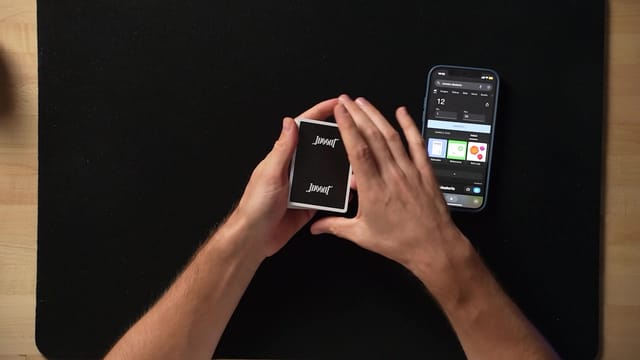
The lesson includes a demonstration and an explanation of the handling. In the demonstration, a number generator replaces the participant who would name the number; the explained presentation is intended to be performed with spectators.
Preparing the card within the action
The first block covers controlling the selection. Julio allows the use of a known control and discusses alternatives related to an overhand shuffle, key card, or glimpse.
The explanation shows how to integrate that preparation into the moment of showing the cards and asking for a response. Attention is paid to the gaze and the words accompanying the position change.
These options are presented as paths leading to the same working point.
Break, grips, and count
It studies how to obtain and maintain a break for a single card. Julio explains a buckle of the bottom card and another way to reach the position, linking Mechanics Grip and Biddle Grip.
He then develops the count and the coordination of the handling. A central part is preserving the same hand path so that the actions maintain a uniform appearance.
One card more and one card less
The explanation connects the handling with the presentation of the neighboring cards. The moment to turn them over and the relationship between what is shown and the number named by the participant are analyzed.
The revelation allows the spectator to take the card and verify its identity.
The checking detail
Julio discusses what happens if the packet is counted again afterward and explains a detail that maintains the final position. He presents this as a possibility for analysis, accompanied by a warning against over-justification.
The emphasis of the usual presentation is on making the sequence clear without adding unnecessary checks.
Materials and prior knowledge
You will need a standard deck and familiarity with some card control. The explanation covers the break and grips used in the handling; you can dwell on those adjustments before incorporating the count.
For the proposed presentation, one person participates by choosing the card and another by naming the number. The generator appearing in the demonstration represents that second role.