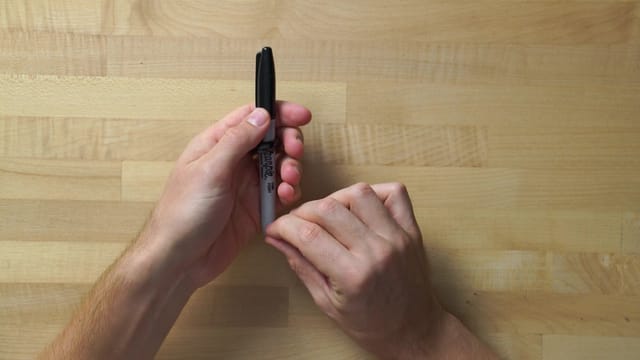
Slow Motion Ring
The Old Way
Most people try to animate objects by holding them awkwardly or using complex gimmicks that break if someone gets too close. You might have tried to balance a ring or coin before, but it usually looks like you’re just struggling to keep it steady. It doesn't look like magic; it looks like a physical challenge.
The Better Approach
This method uses a common item—a marker—to create a "slow motion" effect that feels entirely natural. By using a simple loop technique, you can control the descent of a ring, letting you stop it mid-air or make it fall only when you snap your fingers. Because the setup happens while you are talking to your audience or asking a question, the "heat" is off you, making the magic feel like a genuine moment of control rather than a trick.
It’s less about the specific move and more about how you frame the routine. You’re building a narrative where you have mental control over objects, starting with small sensations and building up to this visual, gravity-defying finale.
About the Instructor
Julio Ribera is a Spanish magician known for turning theory into practical, street-ready magic. He focuses on creating effects that fit into a larger routine, ensuring that every move serves the overall experience rather than just being a standalone puzzle.
What's Included
- How to set the ring on the marker without being noticed
- Using misdirection to mask the setup
- Controlling the speed of the fall
- Managing the audience's focus to keep the method hidden
- Tips on combining this with other static marker routines
Frequently Asked Questions
Will this work if someone is watching closely?
Yes, but the key is the timing. You don't set it up while they are staring at your hands. You do it while you’re talking or asking a question. When the audience is listening to you, they aren't looking for a secret move.
Do I need a special ring?
No, you can use a borrowed ring or even a small object like a rolled-up bill. It’s designed to be impromptu.
Is this hard to learn?
It’s straightforward. You’ll spend most of your practice time on the timing of the setup rather than the physical move itself. Once you get the rhythm down, you can perform it anytime.