Table Riffle Shuffle: Grips and Weave
The table riffle shuffle interleaves the cards of two packets resting on a surface. Julio Ribera explains their preparation, the function of the fingers, and the process until the deck is squared.
Splitting the Deck with Control
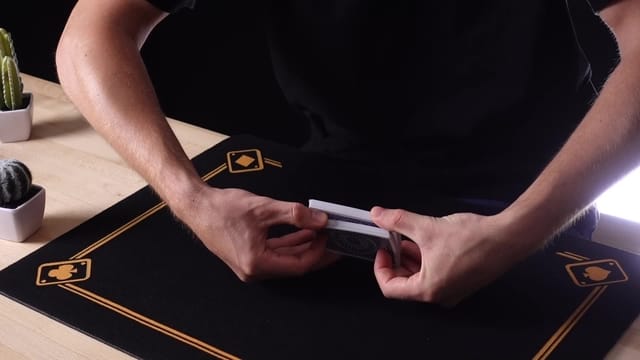
The explanation begins with gripping the corners and separating the deck into two halves. Julio highlights the role of the thumb in taking the packet and relates this habit to the precision needed for later sleights.
That reference explains why he pays attention to a simple cut; it does not turn this tutorial into an explanation of controls or secret breaks. The work developed is the preparation for the shuffle.
Placing the Grips for the Riffle
Once the packets are separated, the fingers are repositioned toward the inner corners. The index fingers provide the support and pressure that allow the thumbs to lift and release the cards.
The tutorial shows the difference between trying to riffle without that support point and doing it with organized pressure. You will learn to connect finger placement with the progressive fall of the cards.
Weaving and Squaring
The packets are faced with a slight diagonal orientation. The explanation goes through how to bring the tips close, release the cards so they interleave, and then bring the assembly back together.
The conclusion includes centering and squaring the cards. Julio repeats the sequence of cutting, grips, riffle, and reunion to connect their phases.
You need a deck of cards and a table to work on. The lesson develops a real and visible shuffle, focused on controlling the packets and the release of the cards. Practice lies in adjusting position and pressure so that the weave and square-up form a continuous action.