Vernon's Triumph: Julio Ribera's version
From apparent disorder to one reversed card
The spectator can shuffle and examine an ordinary deck before selecting a card. After apparently losing it, the magician mixes face-up and face-down cards, displays the chaos and finishes with every card facing the same way except the selection.
Julio Ribera presents and explains his version of the Triumph associated with Dai Vernon. The lesson includes a performance and a tutorial covering the control, apparent mixing, display and final gathering of the packets.
Controlling the card and managing orientation
The first aim is to bring the selection to the bottom without the audience noticing. Julio uses a swing cut, a break and a double undercut, followed by an overhand shuffle that preserves the required position.
These moves appear in the explanation and are revisited during the walkthrough. Familiarity with card controls and holding a break is advisable; this lesson does not replace a complete grounding in those techniques.
Small groups are then taken with varied directions and placements. The gestures and presentation sustain the impression of mixed faces and backs while the handling preserves a specific arrangement. Julio explains the orientation needed for the last card and repeats the sequence to distinguish apparent chaos from the actual preparation.
Locating the division and displaying the packets
The deck is placed on the table and riffled from the magician's viewpoint to locate the change of orientation. Finger placement and viewing angle allow that point to be found without giving the audience the same view.
The packets are divided and arranged in a display that reinforces the impression of mixing. Julio breaks down the opening, the group positions and their collection. The lesson connects the apparent shuffle to the later image of cards still facing opposite ways.
Gathering and revealing
A card is shifted slightly during collection to retain the necessary break. The deck is divided and displayed again with a similar movement pattern, covering the turnover that resolves the situation. This continuity gives a presentational reason for the hands' actions; simply turning a packet over would be too obvious.
A complete recap ends with the importance of a short pause before the reveal. The magical gesture and presentation timing separate the technical actions from the moment the selected card is shown.
Materials and practice
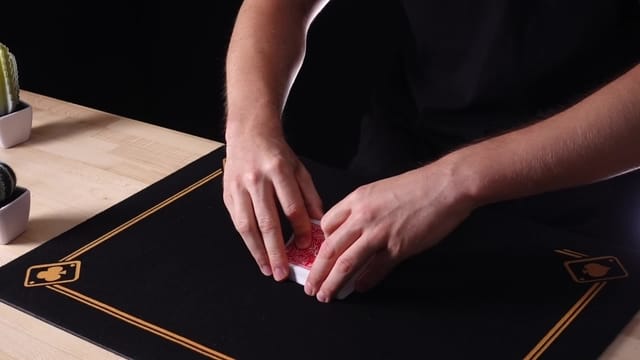
You need an ordinary deck and a table; the example uses a close-up mat for the packets. No gimmicked card or specific commercial magic product is required. Practise the bottom control, group mixing, locating riffle, break, display and gathering, together with the presentation that leads to one reversed card.