Watch Pickpocketing: Straps, Clasps, and Handling Conditions
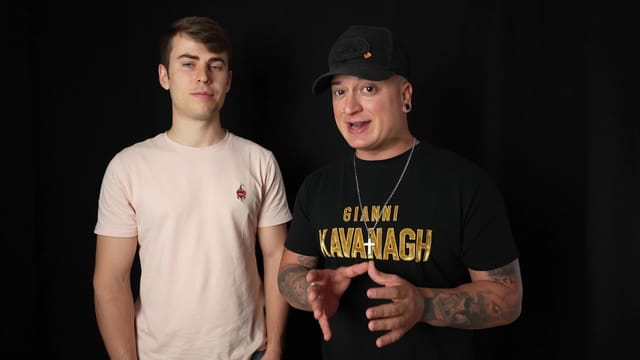
The type of clasp and how a watch is worn greatly alter the conditions for a pickpocket act. Shado El Mago organizes this lesson by families of straps and clasps, explaining which options he prefers and which ones he tries to avoid.
The eight videos combine a theoretical introduction with demonstrations and explanations alongside Julio. The work focuses on recognizing the available material, adapting the handling, and maintaining the continuity of the interaction.
Sports Watch and Contact
The first case uses the simple buckle of the sports model shown. The explanation compares positions, hands, and continuation possibilities after the action.
Here, an idea is introduced that reappears in the other tutorials: the transition of contact and the difference between removing the object and resolving the interaction naturally. The detachable model also allows for a two-stage return; that feature belongs to the demonstration watch and is not attributed to all sports watches.
Rubber Straps
The next two videos study one- and two-handed handlings. Shado compares more malleable or rigid rubbers, the size of the holes, and the position of the keepers. These differences can facilitate one phase and complicate another.
The tutorial shows various positions and explains why the same sequence does not have identical conditions across all models. The two-handed version is linked to the greeting and compared with the one-handed work.
Leather Straps and Phased Work
The explanation continues with leather and the differences in rigidity encountered by the instructor. Different moments of participation are studied, comparing integration into a magic routine with the volunteer's movement back to their spot on stage.
The two-handed version adds two-stage work: separating part of the preparation from the final action. Shado discusses when he considers that option viable and why he does not generalize it to every clasp.
Deployment Clasps and Other Closures
The block dedicated to deployment clasps explains the difficulties of these models and the alternatives he uses when he decides to work with them. It includes differences between models and the possibility of mistaking a deployment clasp for a seemingly simple strap.
The lesson ends by comparing a magnetic clasp and a metal click clasp. The limitations of the strap and the fragility of certain watches are discussed. The recommendations refer to the types and models explained, without promising compatibility with all current models.
Material and Practice Level
You will need practice watches with the clasps you want to study and someone to rehearse the interaction with. To compare all the variants, you will need access to different straps; no specific watch brand or magical product is required.
It is helpful to know the principles of attention and contact in stage pickpocketing. The instructor mentions that he can combine these techniques with sponge ball or coin magic, but the full routines are developed in specific content and are not added here as standalone tricks.
The goal is to learn to identify conditions, choose a reasonable option, and rehearse its phases. The explanation includes decisions to avoid certain clasps and take care of the objects; it does not present difficulty as a challenge that must always be accepted.