Flash, confetti and streamers for stage magic
Choosing a visual effect for your performance
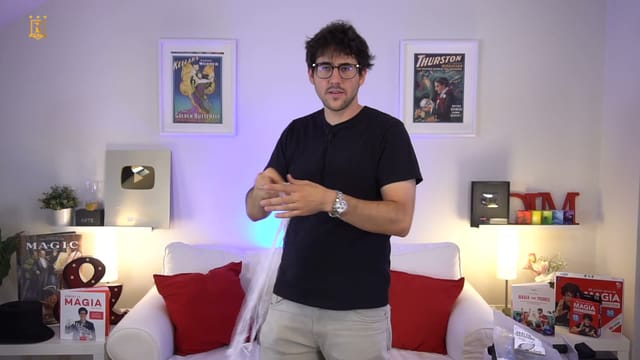
Borja Montón presents materials and devices that can enhance an appearance, a moment of surprise, or the climax of a show. The masterclass covers flash paper and flash cotton, small effect apparatus, confetti loads, stage launchers, and streamers. It combines comparisons, demonstrations, and commentary on the materials he uses.
The goal is to understand the differences between these resources and evaluate their practical requirements. It does not teach a complete routine for a card appearance, Chinese snowstorm, or dove production; those possibilities serve as application examples.
Flash paper, flash cotton, and flash thread
The characteristics and stage uses of all three materials are distinguished. The explanation compares the behavior of paper versus cotton, the influence of the consumable's condition, and the need to anticipate the timing of the effect within the presentation. Flash thread is presented as another option, along with the limitations the instructor has found when using it.
Commercial presentation, preservation, and pre-show preparation are also discussed. The demonstrations highlight differences in intensity and duration; chemical manufacturing of flash materials is not taught.
Small devices and localized effects
Borja showcases Óscar de la Torre's Mini Kabuki, another portable cannon from Bazar de Magia, and custom devices built for his show. He compares size, triggering methods, orientation, and placement possibilities. Applications involving flashes, sparks, and small confetti bursts are shown.
The Pyro Mini is introduced and demonstrated as a device for projecting fire. The recording preserves failed attempts and adjustments, thus showing that simply owning a piece of equipment does not guarantee a successful activation. Other ignition accessories and a mechanical wand are discussed as alternatives; the wand is not demonstrated in action.
References to apparatus and consumables describe the material seen in the recording. They do not imply that all these products are necessary for a single routine, nor that their prices or availability remain as stated.
Confetti: shape, volume, and preparation
Small loads, compact confetti for Chinese snowstorms, and shaped pieces such as butterflies, hearts, or kisses are compared. The instructor explains how their appearance relates to the image of the show and the amount of space he wants to fill.
He also demonstrates an accessory for keeping a load ready during a performance. He presents it as a possibility he discovered, clarifying that he has not yet used it in his professional work. References to Alan Wong and Areson reflect his experience with these consumables without turning the class into a full Chinese snowstorm routine.
For confetti demonstrations involving fire, the recording explicitly notes the necessity of fire-retardant material. Not all displayed confetti types are interchangeable for every device.
Launchers and streamers
The general setup of a stage confetti launcher is explained: consumable, activation equipment, and timing control. An Oh!FX system is shown and CO₂-refillable alternatives are mentioned; an installation or maintenance course for pressurized systems is not provided.
Streamers are presented as another way to close a performance. Borja demonstrates a manual model, compares formats, and discusses their visual range, cleanup speed, and the amount of residue left behind. The appearance of a dove is mentioned as a possible application, though its technique is not taught.
As a final add-on, a manual glass-breaking accessory is shown, and an electric version is mentioned. Its purpose and the issue of fragments are described, but actual glass breakage is not performed in the recording.
Requirements and scope
The effects require specific stage materials and the consumables corresponding to each piece of equipment. You can study the comparisons without buying all of them; recreating a specific application requires the proper materials and preparation, not just household items.
Content intended for ages 18 and up. Flash material carries risks of burns and fire. The recording includes warnings and incidents recounted by the instructor, but it does not replace the safety instructions of individual manufacturers or the coordination of the effect with the venue. It is an introduction to stage resources involving fire, not comprehensive pyrotechnic safety training.
Approximate duration: 39 minutes, featuring explanations, demonstrations, and product references.