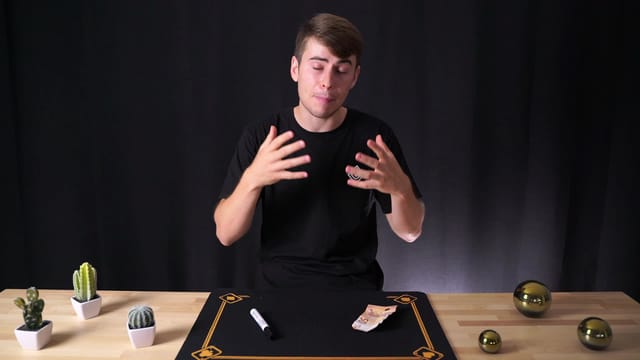
Animation Theory
The Mistake That Makes People Look for Threads
You've probably seen a magician float a bill for a long time. It looks cool for a second, but then the audience starts squinting. They aren't wondering how you did it; they're looking for the wire. When you try to act like a superhero for too long, people stop believing the magic and start hunting for the secret.
Why Small Movements Feel More Magical
In this lesson, Julio Ribera explains why "animation" beats "levitation" almost every time. An animation is a quick, impossible movement—like a pen rolling on its own or a bill jumping to your hand.
When something happens fast, the brain doesn't have time to look for magnets or strings. Instead, it creates a "magic moment" that sticks in the viewer's mind. By using a simple excuse like "static electricity," you give them a reason to believe it might actually be real. That's when they truly get surprised.
How to Make Your Magic Believable
You'll learn how to stop being "too impossible" and start being "actually amazing." Julio breaks down the psychology of why a movie based on a true story is more shocking than a sci-fi movie with lasers. He applies that same logic to your magic. You'll learn how to use short bursts of movement to keep your audience from guessing the method.
About Julio Ribera
Julio has taught magic to millions of people on YouTube. He specializes in street magic and cardistry, focusing on things you can actually do for people in the real world. He’s spent years figuring out which moves get the best reactions and which ones just make people suspicious.
What's Included
- The difference between static levitation and dynamic animation
- How to use "static electricity" to set up a trick
- The "split-second" levitation technique for bills
- Why "too much magic" ruins the surprise
- How to make a pen fall or move on a table naturally
- Tips for building wonder instead of just showing off a trick
Frequently Asked Questions
Is this hard to learn?
The theory is easy to understand right away. However, the moves themselves use "Loops" (invisible thread), which takes some practice to handle without breaking.
Do I need special props?
This lesson is part of a course on Loops. You'll need some elastic invisible thread to do the specific animations Julio describes.
How long until I can do this for people?
You can start using the "animation" mindset immediately. It will change how you perform any trick where things move or float.
What if people are standing close to me?
That's the beauty of animation. Because the movements are quick and subtle, you can often do them much closer than you could with a long, slow levitation.