Loop Mechanics
When to Use a Loop
Imagine you're hanging out with friends and someone hands you a dollar bill. You want to make it float right there, but you don't want to worry about sticking tape to it or fumbling with a long piece of thread. Loops are perfect for close-up situations where people are looking at you from all sides.
Why Loops are Practical
Loops are basically elastic bracelets made of very thin thread. Because they aren't attached to the object, you can make a bill or a card float and then immediately hand it back. There is nothing for the audience to find. You can carry them on your wrist all day and be ready to perform whenever you want.
How Loops Actually Support an Object
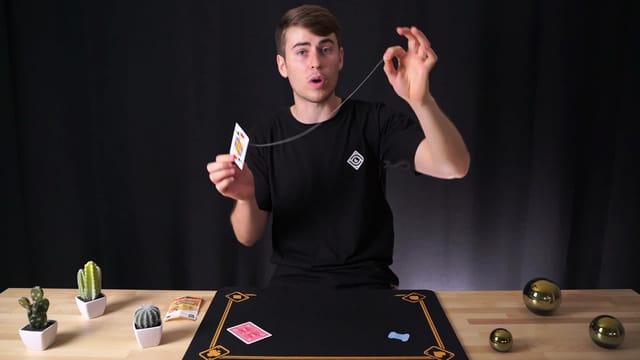
In this lesson, Julio breaks down the physics of how a loop holds an object in the air. It can be hard to see thin thread on camera, so he uses a thick white string to show you exactly where the loop goes and how it creates the lift. You’ll see the difference between using a single strand of thread and using a continuous loop.
Understanding this mechanic is the first step to making your levitations look real. You'll learn how the thread moves against your hands and how to keep the object balanced so it doesn't wobble or fall.
About Julio Ribera
Julio Ribera is a street magic expert who has taught thousands of people how to perform close-up magic. He uses these exact moves in his own performances to get reactions from strangers on the street. He focuses on making magic look natural so you don't look clumsy or awkward.
What's Included in Loop Mechanics
- How "invisible" thread actually works
- The white string demonstration for clear visibility
- The difference between single strands and loops
- How to position the thread to support a bill or card
- Why loops let you end "clean" with no evidence left behind
Frequently Asked Questions
Can I do this with a borrowed bill?
Yes, that's one of the best parts about loops. Since the thread isn't glued or taped to the object, you can use any bill or light object someone gives you.
Is the thread hard to see in the video?
The thread used in real magic is very thin, but for this lesson, Julio uses a thick white string. This makes it easy for you to see exactly what's happening.
Do I need a table to do this?
No. You can do these levitations standing up in the middle of a room or while walking down the street.
Is this good for beginners?
Yes. This lesson covers the basic "how-to" so you understand the concept before you try the harder moves.