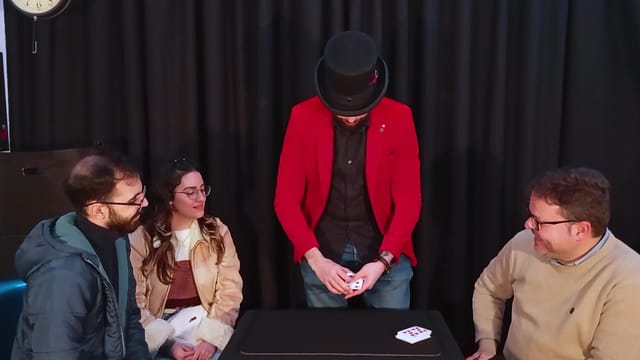
Chameleon Card Intuition Test
The Old Way
Most "Chameleon" card routines force you to use a specific set of cards, which means you have to rely on complicated palming or awkward pocket switches to get the deck clean. You end up having to control every move, and the spectator is never allowed to actually touch or hold the cards at the end because you’re terrified they’ll notice the setup.
The Better Approach
This method lets the spectator name any rank—fives, jacks, sevens—it doesn't matter. Because the deck is built on a specific configuration, you aren't restricted to one set of cards. The routine is designed to be interactive; you frame the whole thing as a test of intuition and focus, which keeps them looking at what you want them to see while the real work happens in plain sight.
The best part is the ending. Instead of just a color change, you provide a clean finish where the spectator can actually hold the cards. It’s balanced to leave them satisfied but not overwhelmed, exactly like serving a great meal—you give them just enough so they walk away impressed and wanting to see more.
About the Instructor
Borja Mazorriaga is a professional worker from Spain who has spent years performing for everyone from skeptical corporate crowds to casual birthday parties. He doesn't believe in magic that looks like a "sledgehammer to crack a nut." His teaching focuses on practical, stress-tested methods that you can actually rely on in real-world conditions.
What's Included
- How to structure the "intuition test" patter to misdirect the audience
- Techniques for handling the deck so the spectator never feels suspicious
- Working with a configuration that allows for any named rank
- Tips on managing your pacing so the audience leaves wanting more
- How to achieve a clean finish that lets the spectator examine the result
Frequently Asked Questions
Will this work if I'm not a pro?
Yes. While it uses sleight-of-hand, the focus is on the presentation and the structure. Borja teaches you how to keep the process simple so you can focus on the audience.
Does this require a custom deck?
The routine relies on a specific configuration. You'll learn how to set that up, which is what makes the "name any number" freedom possible.
Why is this better than the standard versions?
Standard versions are often "magician-centered." This version is spectator-centered—it involves them, lets them name the cards, and ends with them being able to handle the final result.