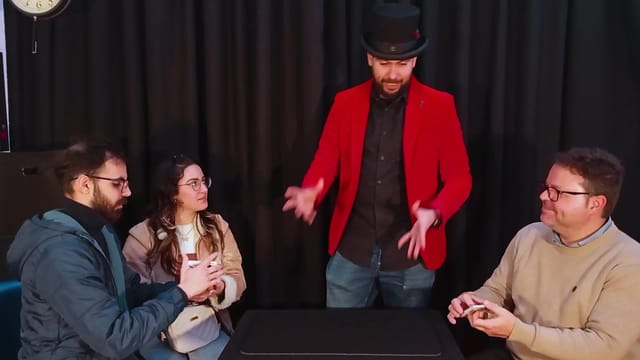
Triumph Variation
The Skill: How Triumph Works
This effect lets you take a chaotic, mixed-up deck and instantly restore order, leaving the spectator's chosen card as the only one facing the wrong way. It’s a classic of card magic because it turns a messy, confusing procedure into a moment of pure clarity that audiences love. Once you learn the mechanics, you can perform it anytime with a borrowed, shuffled deck.
How It's Taught
Borja breaks the routine down into two parts: the control and the restoration. He focuses on the "cull," showing you how to handle the deck so you always know where that specific card is, even when the spectator handles the cards themselves. He’s direct about the mechanics and explains how to recover if your force doesn't land exactly as planned, which is a common worry when performing for real people.
What Level Is This For
This is an intermediate routine. You’ll need a solid grasp of basic card handling. If you’re comfortable with the classic force and have practiced simple card controls, you can pick this up quickly. The difficulty is in the rhythm of the performance, not just the finger work, so expect to put in a few sessions of practice before showing it to friends.
About the Instructor
Borja Mazorriaga is a professional magician from Spain who has built his career on real-world performance. He doesn't rely on theory alone; he performs constantly in every venue imaginable, from small private parties to large stages. His teaching style is practical and grounded in what actually works when you're standing in front of an audience.
What's Included
- The classic force technique for card selection
- How to use the cull to maintain control of the card
- Managing spectator interaction during the mix
- The "Triumph" display for the final reveal
- Tips for recovering if the force doesn't go to plan
Frequently Asked Questions
How long until I can actually use this?
If you already know the classic force, you can get the mechanics down in a few days. The performance flow takes a bit more time to get smooth.
What if I have small hands?
This routine is manageable for almost any hand size because the focus is on the handling of the deck as a whole, rather than awkward finger stretches.
Is this easier with certain cards?
Standard Bicycle playing cards work best. Using a deck you are comfortable with makes the riffle and the control feel much more natural.
Can I learn this without a teacher watching?
Yes. The video lessons are clear, but you should practice in front of a mirror or record yourself on your phone to make sure your handling looks casual and not overly focused on the cards.