Elastic Thread Mechanics
Why Most Elastic Gimmicks Snap
Most people stretch their elastic thread as they tie it. They also cut the ends of the knot flush to the card to make it look clean. This usually leads to a snapped thread or a knot that slips right when you're in the middle of a trick.
How to Set the Right Thread Tension
When you get the tension right, your gimmicks work every time. You won't have to worry about a card snapping back too hard or the thread breaking. It makes your magic look smooth instead of jerky. Plus, your gimmicks will last through dozens of performances instead of just one. Imagine showing two cards, and a split second later, one has vanished and is sitting under the table. You can do that once you know how to set this thread correctly.
What You'll Learn
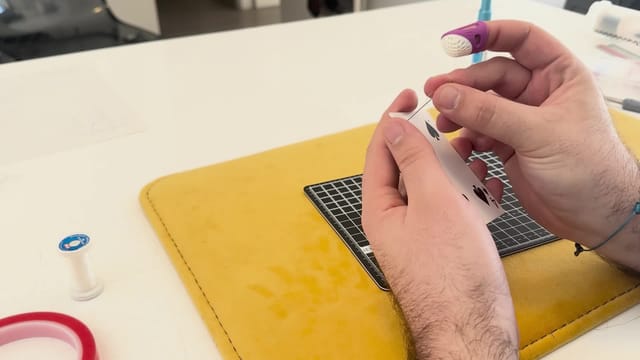
Julio shows you exactly how to prep two cards and thread them. You'll see why he doubles the thread for extra strength. He also teaches a specific way to tie the knot where you don't pull it tight until the very last second. This keeps the cards perfectly aligned.
He also covers the tools you need. You'll see how to use a punch tool or a simple needle and thimble to get the thread through the cards without hurting your fingers or ruining the cards.
About Julio Montoro
Julio Montoro has created some of the best-selling magic gimmicks in the world. He builds these every day and knows exactly where they usually fail. He’ll show you the small details that keep his tricks working in the real world.
Everything in the Elastic Thread Lesson
- How to use a punch tool or needle safely
- Why you should always double your elastic thread
- Aligning cards with tape before you start
- Setting the "natural" tension so the thread doesn't snap
- Tying a secure triple knot
- Why you must leave a "tail" on your thread ends
- A simple card vanish using the finished setup
Frequently Asked Questions
What if I've been pulling the thread tight for years?
You'll find that letting it sit loose while you tie it makes the move much easier to do. It also stops the cards from warping over time.
Do I need special tools?
Julio uses a punch tool (an awl), but he also shows you how to do it with a standard sewing needle and a thimble. You probably have most of what you need at home.
How do I know if the tension is right?
Julio shows you the "trial and error" method. If the card moves when you let go but doesn't feel like it's under a lot of pressure, you've got it.
Is this hard to learn?
Not at all. The video is about seven minutes long, and you'll be able to tie your first professional-grade knot by the time it's over.