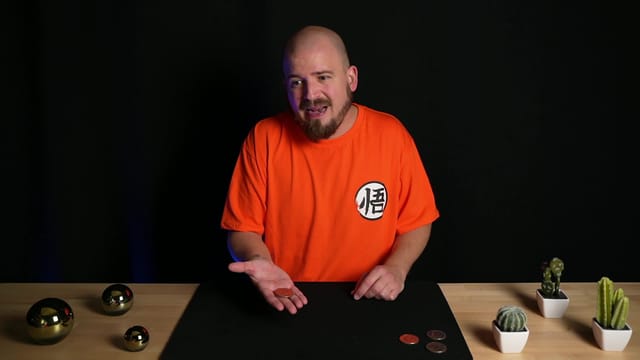
Finger Palm
The Old Way
Most people try to palm a coin by gripping it too tightly with their entire hand. This makes your hand look stiff, tense, and unnatural. When your hand looks like it's holding something, your audience will naturally suspect you have a coin hidden away, which defeats the purpose of the move entirely.
The Better Approach
The finger palm relies on using just two phalanges of your middle fingers to secure the coin. By using your ring finger to apply a light, steady pressure, you can keep the coin locked in place without tensing your whole hand.
The secret isn't just the grip; it's the relaxation. Once you place the coin correctly, you focus on keeping your hand in a natural, semi-open position. This allows you to gesture and move freely while keeping the coin completely hidden from view. With enough practice in front of a mirror, you’ll learn exactly how much to adjust your fingers to close any gaps and stop the coin from "flashing."
About the Instructor
Yago Turia is a specialist in close-up magic with a reputation for creating clear, practical instructional content. He focuses on stripping away unnecessary movement so you can focus on the technical details that make a sleight look truly invisible.
What's Included
- Finding the correct grip on the middle phalanges
- Managing finger pressure for a secure, hidden hold
- Adjusting your hand position to prevent flashing
- Tips for keeping your hand looking natural while holding a coin
- Practice methods to gain confidence and comfort
Frequently Asked Questions
Why is this version of the palm better?
It focuses on ergonomics rather than brute force. By using specific fingers to hold the weight, your hand remains relaxed, which is the key to fooling your audience.
Will this work for me if I have small hands?
Yes. Because you are using the base of your fingers rather than the palm, this move is highly adaptable to different hand sizes. It's all about finding the spot that feels secure for your specific grip.
What if I’ve learned other palms before?
The finger palm is a fundamental tool that complements other techniques. Learning this specific, relaxed version will help you transition into more complex routines without your hands looking tense or unnatural.