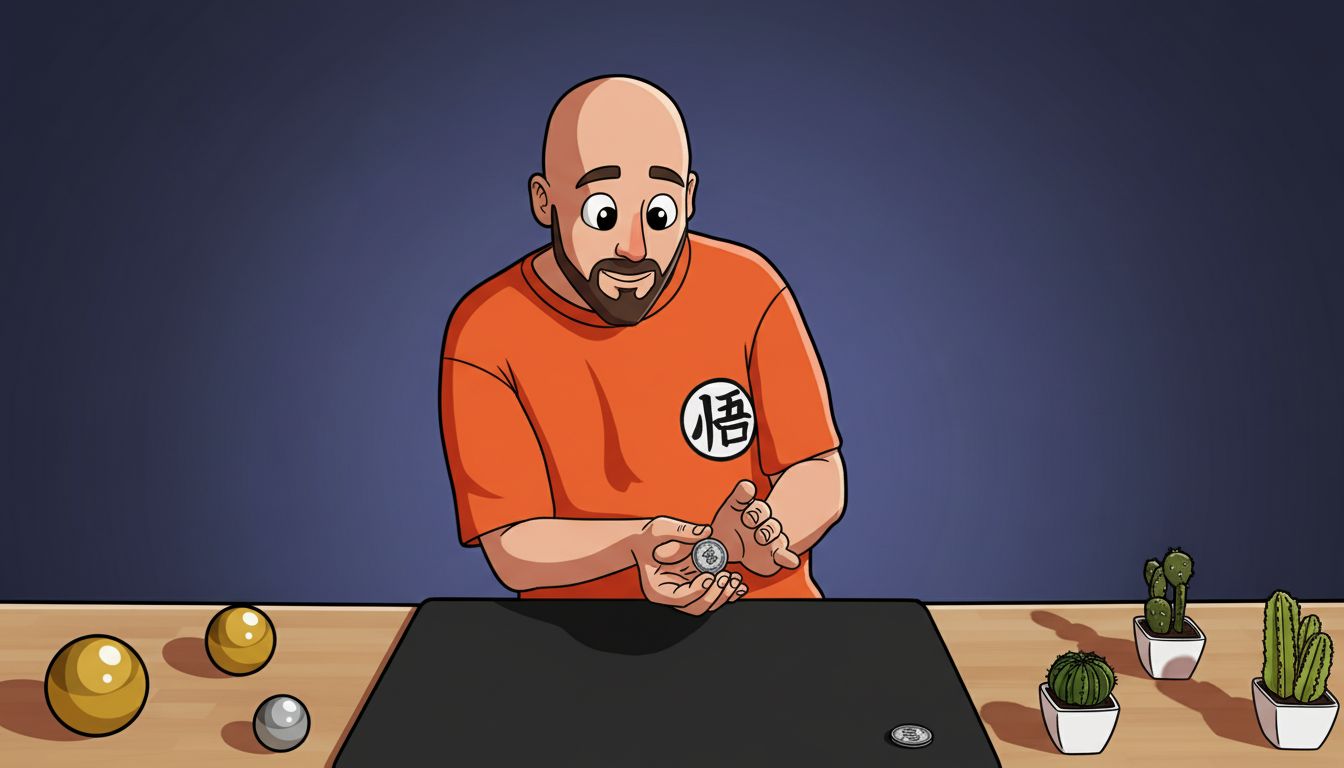
Essential Coin Magic Techniques
A foundational guide to close-up coin sleights, covering essential palms, vanishes, and switches for clean, deceptive performances.
Essential Coin Magic Techniques
A foundational guide to close-up coin sleights, covering essential palms, vanishes, and switches for clean, deceptive performances.
7 Lessons
What It Looks Like
Imagine holding a coin between your fingertips, only to have it disappear into thin air as you reach for it. Or, picture dropping three coins into your hand, where the audience clearly hears the sound of all three hitting, even though you’ve secretly kept one hidden. This course gives you the tools to perform these moments with confidence, making your coin magic look like natural, effortless motion.
Why It Works
Great coin magic isn't about being fast; it’s about being natural. The techniques here rely on "retention of vision" and mimicking everyday actions. When your movements—like picking up a coin or passing one between hands—look exactly like they do when you aren't doing magic, the audience stops looking for a trick. You’re essentially hiding the mechanics in plain sight by keeping your hands relaxed and fluid.
What You'll Learn
You'll start with the basics of palm placement, learning how to hold coins securely without tensing your hands. Once you’re comfortable, we move into classic vanishes like the French Drop and the friction steal. These moves are the bedrock of coin magic.
Beyond just hiding things, you'll learn how to simulate transfers, such as the click pass, which adds an auditory layer to your magic. By the end, you'll be able to perform one-handed switches, allowing you to transform objects right in the spectator's palm.
About the Instructor
Yago Turia is an experienced educator in the world of close-up magic. He focuses on practical, repeatable techniques that help you move past awkwardness and into smooth, professional-looking performances.
What's Included
- Finger Palm: Mastering the hold for empty-handed displays.
- Classic Palm: The standard for secretly retaining coins.
- French Drop: The quintessential vanish for beginners.
- Shuttle Pass: Moving coins between hands while keeping one hidden.
- Click Pass: Creating the illusion of multiple coins dropping.
- Roth's Friction Steal: A smooth way to retain a coin during a toss.
- One-Handed Switch: Changing a coin in your palm instantly.
Frequently Asked Questions
What angles work for these moves?
Most of these techniques are designed for close-up and walk-around magic. As long as the spectators are in front of you, you're safe. Just keep your hands relaxed to avoid drawing attention to your palms.
Can I do this surrounded?
While many of these sleights are perfect for "on-the-table" or frontal performances, some require you to keep the audience at a comfortable distance. Practice in front of a mirror to see your own angles.
What props do I need?
Just some standard coins. Half-dollars or dollar-sized coins work best for learning because they are easier to handle, but you can practice these moves with any coin that feels comfortable in your hand.
How much practice does this take?
The mechanics are straightforward, but the "natural" look takes time. Aim for short, daily practice sessions rather than one long marathon. Once you do these moves hundreds of times, they’ll become muscle memory and you’ll stop thinking about the "trick" part entirely.
What It Looks Like
Imagine holding a coin between your fingertips, only to have it disappear into thin air as you reach for it. Or, picture dropping three coins into your hand, where the audience clearly hears the sound of all three hitting, even though you’ve secretly kept one hidden. This course gives you the tools to perform these moments with confidence, making your coin magic look like natural, effortless motion.
Why It Works
Great coin magic isn't about being fast; it’s about being natural. The techniques here rely on "retention of vision" and mimicking everyday actions. When your movements—like picking up a coin or passing one between hands—look exactly like they do when you aren't doing magic, the audience stops looking for a trick. You’re essentially hiding the mechanics in plain sight by keeping your hands relaxed and fluid.
What You'll Learn
You'll start with the basics of palm placement, learning how to hold coins securely without tensing your hands. Once you’re comfortable, we move into classic vanishes like the French Drop and the friction steal. These moves are the bedrock of coin magic.
Beyond just hiding things, you'll learn how to simulate transfers, such as the click pass, which adds an auditory layer to your magic. By the end, you'll be able to perform one-handed switches, allowing you to transform objects right in the spectator's palm.
About the Instructor
Yago Turia is an experienced educator in the world of close-up magic. He focuses on practical, repeatable techniques that help you move past awkwardness and into smooth, professional-looking performances.
What's Included
- Finger Palm: Mastering the hold for empty-handed displays.
- Classic Palm: The standard for secretly retaining coins.
- French Drop: The quintessential vanish for beginners.
- Shuttle Pass: Moving coins between hands while keeping one hidden.
- Click Pass: Creating the illusion of multiple coins dropping.
- Roth's Friction Steal: A smooth way to retain a coin during a toss.
- One-Handed Switch: Changing a coin in your palm instantly.
Frequently Asked Questions
What angles work for these moves?
Most of these techniques are designed for close-up and walk-around magic. As long as the spectators are in front of you, you're safe. Just keep your hands relaxed to avoid drawing attention to your palms.
Can I do this surrounded?
While many of these sleights are perfect for "on-the-table" or frontal performances, some require you to keep the audience at a comfortable distance. Practice in front of a mirror to see your own angles.
What props do I need?
Just some standard coins. Half-dollars or dollar-sized coins work best for learning because they are easier to handle, but you can practice these moves with any coin that feels comfortable in your hand.
How much practice does this take?
The mechanics are straightforward, but the "natural" look takes time. Aim for short, daily practice sessions rather than one long marathon. Once you do these moves hundreds of times, they’ll become muscle memory and you’ll stop thinking about the "trick" part entirely.