Phantom Balls: Structure and Magic in the Spectator's Hands
A routine built to climax in their hands
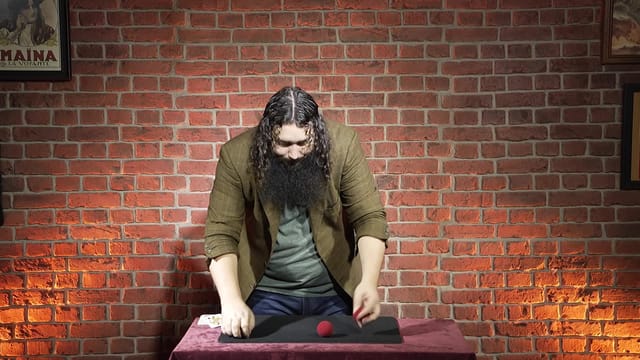
Phantom Balls links several sponge ball magic ideas so that their climaxes happen right in the spectator's hands. Xulio Merino demonstrates a version with same-colored balls and a large ball finale, explaining both the handling and the structural decisions that connect the sequences.
The lesson features a demonstration, two explanation videos that cover substantially the same routine, and four brief reviews of technical details. You will be able to study the full sequence and return to specific points regarding the opening and steals.
An opening with cards and a ring
The first ball appears alongside a chosen card. From there, a ring is introduced, travels between the hands are presented, and an apparent splitting of the ball takes place. The explanation breaks down the loads, real and simulated actions, and the continuity that leads to having three balls in view.
This opening allows you to transition from card magic to working with sponges. Xulio also explains the option to start directly with the balls if you prefer to jump straight into the core of the routine.
Always Three, transposition, and lingering climaxes
The central block begins with two phases of Always Three: one ball is set aside, and three reunite once more. The sequence is left hanging while a transposition with two balls begins. Instead of resolving each idea immediately, the construction returns to their climaxes later, in the participant's hands.
Xulio examines a specific progression: presenting the effect, repeating it with clearer conditions, and bringing the climax into the spectator's hands. The explanation connects this structure with pauses, false counts, and the magician's performance.
Participation and final large ball
The interactive phases apply the "Take it, take it" addition, the three-as-two count, and the necessary changes to gather the balls. The tutorial explains when to capitalize on reveals, how to set up the loads, and how to direct attention before the hand opens.
The finale replaces the expected repetition with the production of a large ball. Xulio demonstrates the switch required for this version and discusses the contrast in expectations he aims for with this closer.
Props, setup, and prerequisites
You will need four small same-colored sponge balls and one large sponge ball, along with accessible pockets to organize your props. For the opening, you will also need a deck of cards and a ring. The explanation uses a table and close-up mat, and addresses specific adaptations for strolling or cocktail magic.
It is helpful to know finger palm, false transfers, the delicate extraction, counts, and the spectator addition. The lesson applies them within an extensive routine and explains how the phases link together. The final switch is briefly described here as part of the handling that leads to the large ball.