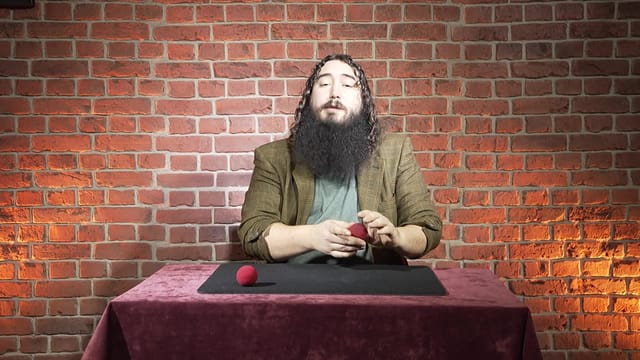
Sponges in the Spectator's Hands: Structure and Add-ons
Designing Participation and Making Instructions Clear
The strength of an effect in the spectator's hands depends on the structure, how the props are handed over, and what the participant understands they need to do. Xulio Merino brings these aspects together in four videos on theory and applied technique with sponge balls.
The lesson presents the map for adding, removing, or switching objects and develops two specific add-ons. The goal is to build the feeling that the spectator has picked up the ball by themselves, coordinating the magician's intervention with the participant's actions and memory.
Where to Place the Effect in the Routine
The first video compares performing the work initially in your own hand versus doing it directly in the spectator's. Xulio studies the clarity of the delivery, the image of the empty hand, and the number of actions each option requires.
He then analyzes three structural positions for participation: opening, the end of a sequence before an epilogue, or the close of the routine. He explains his preference for culminating a sequence in the spectator's hands and then adding a small closer afterward, without presenting that choice as the only possible one.
"Place It on Your Hand"
The first add-on uses instructions and the magician's example to organize the delivery. It explores how to demonstrate what is expected of the participant and how to adjust the action when they already have the ball in their hand.
The explanation includes the standard handling with an extra ball and a variation without it that requires more precise timing. It also addresses the situation where the spectator takes the prop before being asked and how to steer the participation back on track.
"But Take It, Take It"
The second add-on is approached without an extra ball. Xulio develops the attitude, the cue to pick up the ball, and the coordination with the approaching hand. The explanation distinguishes between the effective action and the impression you want to leave on the spectator.
He also devotes attention to the pause between the delivery and the opening of the hand. You will study how to use continuity actions and revelations so that the phase integrates smoothly into the rest of the presentation.
Participants Who Jump the Gun and Small Hands
The final video offers resources for those who tend to open their hand too early or need clearer cues. It includes a challenge-style presentation and the option to use both hands.
When working with small hands, Xulio explains how to adapt the grip and keep the number of objects clear. These resources allow you to tailor the grip and the clarity of the instructions to the participating person.
Materials and Prior Knowledge
You will need two or three sponge balls to rehearse the options with and without an extra ball, a working surface, and a volunteer to participate when practicing the add-ons. The instructor uses the close-up pad as a practice aid.
It is helpful to be comfortable with the finger palm and the false transfer. In addition to the technical exercise, dedicate practice time to the instructions, the wait, and the moment you seek the participant's attention: they are all part of the handling being taught.