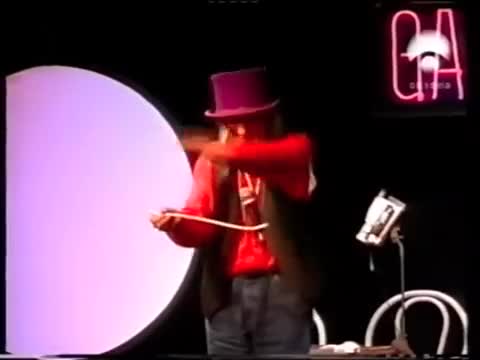
Hindu Rope
How the Hindu Rope Actually Works
The secret to this effect isn't a hidden move or a difficult technique—it's entirely in the construction of the prop itself. The rope is designed to be rigid in one direction and flexible in the other. Once you understand how to orient the rope, the "magic" happens automatically.
Why This Changes Things
Because the method is built into the object, you don't have to worry about finger positions or difficult angles. This lets you focus entirely on your performance. Instead of stressing about a move, you can spend your practice time working on the jokes, the "invisible string" patter, or the timing of the rope's collapse. It turns a simple prop into a tool for comedy and audience interaction.
What This Content Covers
This lesson breaks down the physical properties of the rope and how to handle it to create the illusion of a vertical, rigid object. You'll learn:
- How to identify the "bend" direction of the rope.
- How to switch from a rigid state to a limp, natural state instantly.
- Performance tips, including how to use rhythmic tapping to make the rope "jump."
- Ideas for routines, such as pretending the rope is held up by imaginary strings.
About the Instructor
Julio Ribera is a Spanish magician and digital creator known for his practical approach to magic. With millions of followers, he focuses on teaching the fundamentals of close-up and street magic by showing real-world effects and breaking them down into simple, actionable steps.
What's Included
- The mechanical principle behind the rigid rope
- Handling for vertical and horizontal displays
- Techniques for making the rope "jump" on command
- Performance ideas for engaging your audience
- Tips for making the rope appear natural before the effect begins
Frequently Asked Questions
Is this theory or practical?
It is entirely practical. The method is built into the rope, so you can start performing it as soon as you understand the orientation.
Do I need to understand the 'why' to do the 'how'?
You just need to understand the orientation. Once you feel the rope in your hands, the "why" becomes obvious immediately.
Will this work with techniques I already know?
Absolutely. Because this is a prop-based effect, it fits perfectly as a lighthearted, comedic break between card tricks or other sleight-of-hand routines.
How detailed is the explanation?
The explanation is straightforward and direct. Since the mechanism is simple, the focus is on how to handle the rope to make it look like a normal object until the moment you decide to make it stand up.