Card magic with Elías D’Sastre: number, Triumph and acrobatic cards
Study three complete routines with Elías D’Sastre: card at a number with complementary packets, table Triumph and acrobatic cards. The path combines principles, controls, counts and presentation, progressing from accessible handling to technical packet sequences.
Card magic with Elías D’Sastre: number, Triumph and acrobatic cards
Study three complete routines with Elías D’Sastre: card at a number with complementary packets, table Triumph and acrobatic cards. The path combines principles, controls, counts and presentation, progressing from accessible handling to technical packet sequences.
3 Lessons
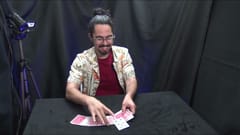
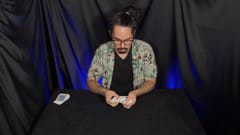
Three ways to build a card effect
Elías D’Sastre brings together three performances with their complete explanations. The path starts with a principle involving positions and dealing, continues with a table Triumph routine and ends with an acrobatic-card sequence. The progression takes you from accessible handling to more demanding work on shuffles, cover and packet counts. Each lesson retains its own method and can be studied separately.
Card at a number with complementary packets
A remembered card appears at the position chosen by the spectator. The lesson covers the calculation with a 52-card deck, dealing, reassembling packets and adjustments according to when the number is requested. The procedure’s conditions matter: the position is chosen within a suitable range. Patter and directing attention allow the counts to fit naturally into the performance.
Table Triumph
The cards appear to be shuffled face up and face down; when spread, they all face the same way except the selection. Elías proposes riffle-shuffle exercises and explains the control, bed of cards, turnover, cover and double cut. The presentation separates the deck righting itself and the discovery of the selection into two moments. This routine requires technical practice and a surface for shuffling and spreading.
Acrobatic cards
The ace, two, three and four change orientation within a presentation about remembering and forgetting a card. The explanation covers the setup, production, Elmsley counts, doubles and multiple turnovers, along with the links and pauses that support the sequence. The work focuses on maintaining the order, covering the cards that must be handled as one and watching the angles.
Materials and practice
You need an ordinary deck and a table or supporting surface. The first lesson uses exactly 52 cards; Triumph does not require a complete deck. For the acrobatic cards, you must prepare the specified cards, and you only need a marker if you choose the signed-card presentation. No specific accessory is included or required to be purchased.
Practise each routine’s actions first, then their links with questions, eye contact and instructions to the spectator. Bibliographic references are suggestions for study, not included materials. The difficulty increases along the path; knowing the explanation does not replace rehearsing the handling and presentation.