

Mentalism
Study presentation, preshow, predictions, book test, center tear, pendulum, and mental card magic. Work on participant interaction and the construction of revelations, ranging from everyday materials and stacked decks to Cesaral equipment and Master Prediction, with specific requirements and conditions for each routine.
Mentalism
Study presentation, preshow, predictions, book test, center tear, pendulum, and mental card magic. Work on participant interaction and the construction of revelations, ranging from everyday materials and stacked decks to Cesaral equipment and Master Prediction, with specific requirements and conditions for each routine.

19 Lessons
Fundamentals of mentalism: presentation, preshow and pendulum
La elección del mago: dos hacia delante y uno hacia atrás
Book Test with ordinary books
Pendulum Mentalism: Names and Memories

Animal Prediction
Invisible Deck and Brainwave
Si Stebbins: Book Test and Stacked Deck
Metal bending with forks
Creativity and presentation in mentalism and card magic
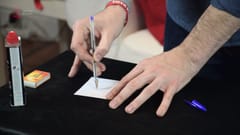
Center Tear: Technique and Presentation
Three-thought card divination
Balloon Prediction
Half-Stack Memorized Deck: Weighed Cards and The Liar
Stacked Deck: Revelations and Card at Number
Card magic: thought-of cards, naturalness, and torn and restored card
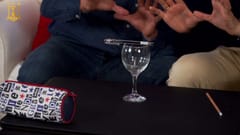
Telekinesis with Cesaral PK Objects
Campana espiritista Cesaral: manejo y presentaciones
Predicción de lotería Cesaral: presentación y revelación
Master Prediction: preparation and stage presentation
Predictions, Divinations, and Presentation
This path brings together 19 lessons on mentalism, mental card magic, and stage effects. You will work on the clarity of instructions, audience interaction, and the construction of a revelation, alongside the techniques and preparations for each routine. The approach is that of illusionism: presentations involving thought-reading, intuition, or telekinesis are theatrical effects, not demonstrations of genuine psychic powers.
The curriculum combines single-effect tutorials, broader lectures, and explanations of specialized equipment. It allows you to study various ways of presenting a prediction, although not all lessons share the same technical or material requirements.
Fundamentals, Persona, and Prior Audience Involvement
Adolfo Masyebra opens the path with criteria on presentation, ethics, and a variety of effects. You will study the coherence between persona, words, and props, as well as how to handle the participant without turning their beliefs or memories into an awkward situation. The lecture compares mentalism resources without developing each specialty as a full standalone course.
A word prediction allows for an explanation of the preshow: preparing the participant before the performance, giving clear instructions, and later linking that experience to the public moment. Materials like a force notepad, book, or cards are compared. The pendulum exercise is demonstrated and explained with careful attention to comfort, instructions, and response time. References to hypnosis, tarot, and other effects broaden the context, but do not teach full routines for each.
Choices, Books, and Participation
Daniel Collado explores the magician's choice and the "two ahead and one behind" procedure. You will study how to phrase instructions, sequence decisions, and make a prediction with few props look natural. He then covers a book test using ordinary books, focusing on preparation, progressive revelation, and how to help a participant who makes a mistake or gets nervous. Using ordinary books does not mean any book can be used without preparation.
Greca introduces the pendulum through a routine involving names and memories, and shows an application with a hidden coin. The focus is on participation, the personal meaning of the responses, and the respectful handling of emotional themes. In the animal prediction, you will learn how to organize inputs from multiple spectators, prepare the material, and choose when to reveal each piece of information so the climax is clear.
Stacked Decks and Metal Bending
Borja Montón explains the Invisible Deck and Brainwave: preparation, handling, pressure, orientation, and maintenance, alongside presentations for different audiences. Woody Aragón combines the Si Stebbins stack with a book test and studies the relationship between deck order, the choice, and the revealed information. His class also includes an ace and suit card routine; not all of its content is mentalism.
Daniel Collado tackles metal bending using forks and alternatives with spoons. You will work on prop selection and preparation, transformation phases, and the timing for displaying each change. Distance, angles, and audience positioning are part of the presentation conditions.
Building a Routine and Guiding the Audience
Daniel Collado's lecture expands on creativity and presentation: intent, empathy, association of ideas, and adapting effects to the performer. It combines mentalism with card magic, ranging from seemingly thought-of choices to spelling tricks and small-packet handling. Some sections require advanced card technique. The closing performance of The Gift serves as a demonstration, without an explanation of its method.
Borja Montón applies the center tear to the divination of a thought-of word. Paper, folds, switches, pauses, and audience instructions are studied, along with two revelation options using a notepad or phone. The opening presentation uses fire, but the technique does not require it: a fireless alternative is explained. The core handling requires accessible pockets and attention to angles; the seated or notepad options have varying degrees of demonstration.
Greca next presents a three-thought divination using cards. You will study the organization of interactions, legible writing, card handling, and the continuity between revelations. The initial choice of a card requires knowing whatever card magic resource is being used.
In the balloon prediction, several travel-related decisions lead to a final revelation. Preparation, prior interaction with a participant, and coordination between presentation and handling are explained. This is a demanding routine, suited for parlor or stage conditions involving distance and angles; it is not recommended for an audience positioned very close.
Memory and Mental Card Magic
Woody Aragón's two classes build upon a previously studied memorized deck. The first uses half a deck for Weight Estimation and The Liar, featuring practice drills and methods to maintain the necessary stack order. The second covers divinations, apparent memory demonstrations, and a card at any number. The latter involves specific selection and preparation conditions; it is not presented as a completely free choice of any card and any number.
Dani Daortiz's lecture connects thought-of cards, naturalness, instructions, and the recollection of past events. It includes The Earthquake, Memory Extension, and Triple Intuition, alongside versions of the torn and restored card. This is a comprehensive card magic lecture featuring advanced technical work and routines that go beyond mentalism. Familiarity with controls, double lifts, and palms is recommended to get the most out of its more demanding sections.
PK Objects and Cesaral Equipment
César Alonso and Borja Montón present Cesaral PK objects and their preparation, balance, and staging conditions. These are specialized props, not interchangeable everyday items. The paintbrush application is introduced and partially demonstrated, without completing a full painting.
The spirit bell allows for a study of the coordination between sound, actions, and instructions. César explains its handling and maintenance, a card location, and presentation options with participants. Comedy elements, interpersonal connections, or escape room concepts have varying degrees of development; they do not all constitute complete routines.
The lottery prediction is presented as a gift. The introduction of information, team confirmations, and various ways to reveal the ticket or printed text are analyzed. Working personally with a control or using an assistant are alternative approaches depending on the setup. The explanation does not replace the specific instructions for each accessory.
Master Prediction for Stage
Borja Montón wraps up the course with the preparation and presentation of a Master Prediction. You will study the choice of box and stand, paper organization, signed envelopes, and progressive revelations. The lecture also covers how to give meaning to the prediction within a narrative.
The main version requires an assistant and joint rehearsal. Details of a ring presentation are shown, but a full ring flight is not taught, nor are blueprints provided for manufacturing the apparatus.
Materials and Prior Preparation
The early routines use everyday objects, books, paper, cards, and writing materials; others incorporate a pendulum, coins, forks, or spoons. The card lessons require standard decks, stacked decks, or pre-ordered decks depending on the effect. The balloon prediction uses prepared materials, cards, a folder, and a balloon. For the memorized deck classes, prior knowledge of the corresponding positions is required; they are not a zero-to-hero memory course.
For the center tear, you need paper and a non-bleeding writing instrument, plus accessible pockets for the core handling. A notepad and mobile phone serve as alternative revelation options; the fireless version allows you to practice without ignition materials. For Adolfo's pendulum exercise, the pendulum, a card or piece of paper, and a marker are sufficient; the preshow requires only the materials for your chosen alternative, not all products shown.
PK objects, the bell, the Cesaral prediction system, and the Master Prediction are specialized options within the curriculum. You will need the corresponding equipment to reproduce those applications, but you do not need to purchase every device to study the other lessons. Products, accessories, and consumables are sold separately. The features discussed correspond to the models in the recordings, without guaranteeing current availability or compatibility. Physical equipment is not included, nor is downloadable material promised.
Predictions, Divinations, and Presentation
This path brings together 19 lessons on mentalism, mental card magic, and stage effects. You will work on the clarity of instructions, audience interaction, and the construction of a revelation, alongside the techniques and preparations for each routine. The approach is that of illusionism: presentations involving thought-reading, intuition, or telekinesis are theatrical effects, not demonstrations of genuine psychic powers.
The curriculum combines single-effect tutorials, broader lectures, and explanations of specialized equipment. It allows you to study various ways of presenting a prediction, although not all lessons share the same technical or material requirements.
Fundamentals, Persona, and Prior Audience Involvement
Adolfo Masyebra opens the path with criteria on presentation, ethics, and a variety of effects. You will study the coherence between persona, words, and props, as well as how to handle the participant without turning their beliefs or memories into an awkward situation. The lecture compares mentalism resources without developing each specialty as a full standalone course.
A word prediction allows for an explanation of the preshow: preparing the participant before the performance, giving clear instructions, and later linking that experience to the public moment. Materials like a force notepad, book, or cards are compared. The pendulum exercise is demonstrated and explained with careful attention to comfort, instructions, and response time. References to hypnosis, tarot, and other effects broaden the context, but do not teach full routines for each.
Choices, Books, and Participation
Daniel Collado explores the magician's choice and the "two ahead and one behind" procedure. You will study how to phrase instructions, sequence decisions, and make a prediction with few props look natural. He then covers a book test using ordinary books, focusing on preparation, progressive revelation, and how to help a participant who makes a mistake or gets nervous. Using ordinary books does not mean any book can be used without preparation.
Greca introduces the pendulum through a routine involving names and memories, and shows an application with a hidden coin. The focus is on participation, the personal meaning of the responses, and the respectful handling of emotional themes. In the animal prediction, you will learn how to organize inputs from multiple spectators, prepare the material, and choose when to reveal each piece of information so the climax is clear.
Stacked Decks and Metal Bending
Borja Montón explains the Invisible Deck and Brainwave: preparation, handling, pressure, orientation, and maintenance, alongside presentations for different audiences. Woody Aragón combines the Si Stebbins stack with a book test and studies the relationship between deck order, the choice, and the revealed information. His class also includes an ace and suit card routine; not all of its content is mentalism.
Daniel Collado tackles metal bending using forks and alternatives with spoons. You will work on prop selection and preparation, transformation phases, and the timing for displaying each change. Distance, angles, and audience positioning are part of the presentation conditions.
Building a Routine and Guiding the Audience
Daniel Collado's lecture expands on creativity and presentation: intent, empathy, association of ideas, and adapting effects to the performer. It combines mentalism with card magic, ranging from seemingly thought-of choices to spelling tricks and small-packet handling. Some sections require advanced card technique. The closing performance of The Gift serves as a demonstration, without an explanation of its method.
Borja Montón applies the center tear to the divination of a thought-of word. Paper, folds, switches, pauses, and audience instructions are studied, along with two revelation options using a notepad or phone. The opening presentation uses fire, but the technique does not require it: a fireless alternative is explained. The core handling requires accessible pockets and attention to angles; the seated or notepad options have varying degrees of demonstration.
Greca next presents a three-thought divination using cards. You will study the organization of interactions, legible writing, card handling, and the continuity between revelations. The initial choice of a card requires knowing whatever card magic resource is being used.
In the balloon prediction, several travel-related decisions lead to a final revelation. Preparation, prior interaction with a participant, and coordination between presentation and handling are explained. This is a demanding routine, suited for parlor or stage conditions involving distance and angles; it is not recommended for an audience positioned very close.
Memory and Mental Card Magic
Woody Aragón's two classes build upon a previously studied memorized deck. The first uses half a deck for Weight Estimation and The Liar, featuring practice drills and methods to maintain the necessary stack order. The second covers divinations, apparent memory demonstrations, and a card at any number. The latter involves specific selection and preparation conditions; it is not presented as a completely free choice of any card and any number.
Dani Daortiz's lecture connects thought-of cards, naturalness, instructions, and the recollection of past events. It includes The Earthquake, Memory Extension, and Triple Intuition, alongside versions of the torn and restored card. This is a comprehensive card magic lecture featuring advanced technical work and routines that go beyond mentalism. Familiarity with controls, double lifts, and palms is recommended to get the most out of its more demanding sections.
PK Objects and Cesaral Equipment
César Alonso and Borja Montón present Cesaral PK objects and their preparation, balance, and staging conditions. These are specialized props, not interchangeable everyday items. The paintbrush application is introduced and partially demonstrated, without completing a full painting.
The spirit bell allows for a study of the coordination between sound, actions, and instructions. César explains its handling and maintenance, a card location, and presentation options with participants. Comedy elements, interpersonal connections, or escape room concepts have varying degrees of development; they do not all constitute complete routines.
The lottery prediction is presented as a gift. The introduction of information, team confirmations, and various ways to reveal the ticket or printed text are analyzed. Working personally with a control or using an assistant are alternative approaches depending on the setup. The explanation does not replace the specific instructions for each accessory.
Master Prediction for Stage
Borja Montón wraps up the course with the preparation and presentation of a Master Prediction. You will study the choice of box and stand, paper organization, signed envelopes, and progressive revelations. The lecture also covers how to give meaning to the prediction within a narrative.
The main version requires an assistant and joint rehearsal. Details of a ring presentation are shown, but a full ring flight is not taught, nor are blueprints provided for manufacturing the apparatus.
Materials and Prior Preparation
The early routines use everyday objects, books, paper, cards, and writing materials; others incorporate a pendulum, coins, forks, or spoons. The card lessons require standard decks, stacked decks, or pre-ordered decks depending on the effect. The balloon prediction uses prepared materials, cards, a folder, and a balloon. For the memorized deck classes, prior knowledge of the corresponding positions is required; they are not a zero-to-hero memory course.
For the center tear, you need paper and a non-bleeding writing instrument, plus accessible pockets for the core handling. A notepad and mobile phone serve as alternative revelation options; the fireless version allows you to practice without ignition materials. For Adolfo's pendulum exercise, the pendulum, a card or piece of paper, and a marker are sufficient; the preshow requires only the materials for your chosen alternative, not all products shown.
PK objects, the bell, the Cesaral prediction system, and the Master Prediction are specialized options within the curriculum. You will need the corresponding equipment to reproduce those applications, but you do not need to purchase every device to study the other lessons. Products, accessories, and consumables are sold separately. The features discussed correspond to the models in the recordings, without guaranteeing current availability or compatibility. Physical equipment is not included, nor is downloadable material promised.