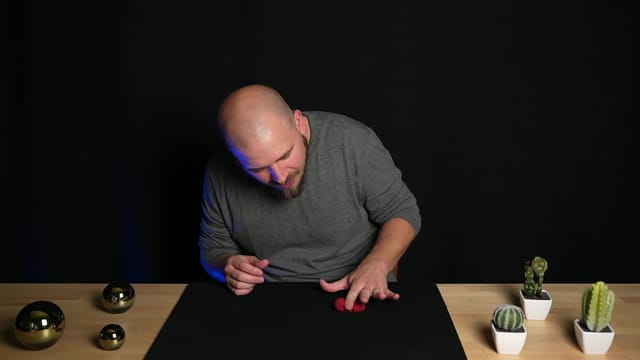
Sponge Ball Multiplication
The Secret Insight
The secret to effective sponge magic isn't how hard you squeeze—it's how you handle the space around your hands. Most people try to hide the extra sponges by clenching their fists, which looks unnatural. If you keep your hand relaxed and use the sponge’s natural softness, your audience won't suspect a thing.
Why This Changes Things
When you stop treating sponge balls like rigid objects and start treating them like soft, malleable material, the "multiplication" happens naturally. By focusing on the pressure you apply to the table rather than the sleight itself, you create a convincing illusion that the sponge is literally splitting in two. It takes the stress out of the performance so you can focus on the presentation.
What This Content Covers
This lesson breaks down two distinct ways to produce and multiply sponges. We start with a table-based routine where you use pressure to make the sponge divide, followed by a "tearing" illusion where you create the second sponge right in front of the spectator's eyes. The teaching is direct and focuses on hand positioning, angle management, and natural movement.
About the Instructor
Yago Turia is a specialist in close-up magic, known for his work in sponge ball manipulation. He creates instructional content that focuses on making complex-looking effects accessible to magicians of all skill levels.
What's Included
- The Finger Palm Setup: How to hold two sponges without looking tense.
- Pressure-Based Division: Using table contact to create the illusion of a split.
- The Masking Technique: Using one hand to screen the production of the second sponge.
- The Tearing Illusion: How to simulate ripping a sponge in half to produce a new one.
- Angle Management: Keeping your hands natural to hide the extra sponge from any view.
Frequently Asked Questions
Is this theory or practical?
This is purely practical. You'll be ready to perform these moves after a short practice session.
Do I need to understand the 'why' to do the 'how'?
Not really. The mechanics are simple enough that you can start doing them immediately, but understanding the pressure technique helps you make the effect look much cleaner.
Will this work with techniques I already know?
Yes. These moves are designed to be simple and can easily fit into any existing sponge ball routine you already perform.
How detailed is the explanation?
The videos focus on exactly where to place your fingers and how to time the movements so the "split" looks smooth and convincing.