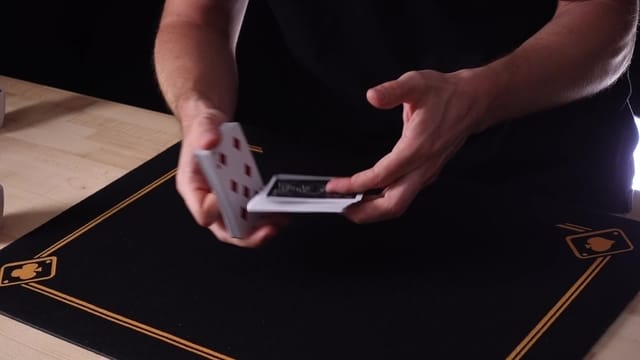
Table Riffle Shuffle
Why your riffle shuffle feels clunky
You’ve been there—you try to riffle shuffle on the table, and the packets just smash into each other or jam up. It looks messy, and you lose the clean, professional look you’re going for. Most people struggle because they try to shuffle with the packets perfectly parallel, which forces the cards to collide instead of weaving together.
The fix: diagonal positioning
This lesson breaks down the exact grip and angle you need to get a smooth, consistent riffle every time. You’ll learn how to position your hands using a Biddle-style grip and, more importantly, how to angle the packets diagonally on the table. This simple adjustment prevents your thumbs from colliding and lets the cards interweave effortlessly.
About the instructor
Julio Ribera is a professional magician and educator who focuses on making sleight-of-hand accessible. He built his career by breaking down complex moves into practical, usable mechanics that you can actually perform at a table.
What’s included
- The Mechanics Grip: How to hold the deck for maximum control.
- Packet Positioning: Why a diagonal setup is the secret to a smooth weave.
- Finger Pressure: Using your index finger and thumb to manage the riffle speed.
- Squaring Technique: How to keep the cards tight and neat throughout the move.
Frequently Asked Questions
Is this hard to learn?
It’s an intermediate move. You’ll need a little bit of practice to get the "feel" of the pressure, but because the mechanics are so logical, you’ll see progress quickly.
Do I need special cards?
No, you can use any standard deck of playing cards.
Will this help me with other moves?
Yes. The grip and pressure techniques taught here are the same ones used in forces and other common card maneuvers.
Is this for beginners?
If you can hold a deck of cards, you can learn this. It’s a foundational skill that will immediately make your card handling look more professional.