Classic Sliding Turnover for the Double Lift
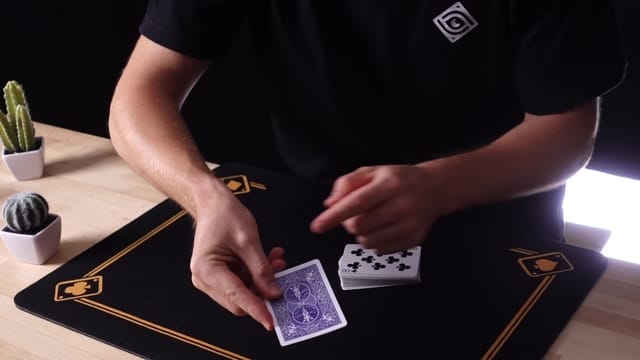
Julio Ribera explains the classic sliding turnover for the double lift. The lesson begins with the break already obtained and focuses on gathering, turning over, and returning the cards while maintaining their alignment.
Holding without losing alignment
The explanation goes over the finger contact points and the function each one serves. Julio distinguishes between the supports that limit shifting and those that secure the handling, in order to understand how to keep the cards squared during the turn.
The tutorial reviews this position before initiating the turnover. The learning process focuses on coordinating the points of contact, rather than compensating for a poor grip by squeezing harder.
Using the support of the deck
The instruction works on the sliding path across the deck before completing the turn. Julio explains that this contact provides an additional point of support and helps keep the cards aligned throughout the move.
He also shows the final placement. The resulting position prepares for a potential subsequent recovery of the break, although this lesson focuses on the turnover rather than the complete recovery method.
Maintaining a natural gesture
Julio insists that pressure must not turn the handling into a rigid action. The relationship between grip, support, and fluidity is shown, and practicing the turnover repeatedly is suggested to get used to the coordination.
You will need a deck of cards and know how to obtain a pinky break before following this explanation. The lesson covers the classic sliding turnover and its squaring; the initial acquisition of the break and the full method for recovering it afterwards are outside the scope of this specific teaching.