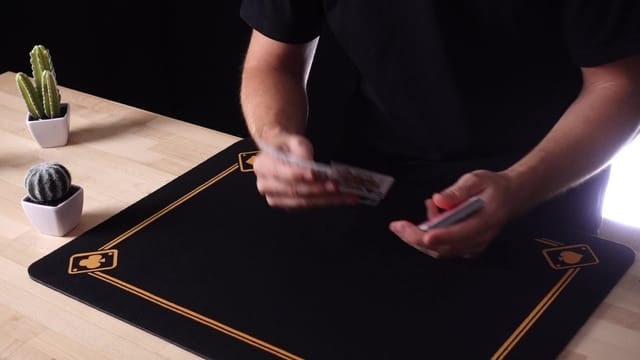
DMB Spread Control: Switch and Bottom Control
The DMB Spread Control combines a switch with controlling the chosen card to the bottom of the deck. Julio Ribera explains how to prepare the spread, show the card, and coordinate the change with the continuation of the handling.
Preparing a Stable Spread
The explanation uses Straddle Grip and a slightly curved spread. Julio examines the support points that keep the packet of cards firm while other actions take place underneath.
The placement of the pinky, ring finger, and thumb relates to this stability. The tutorial explains why the shape of the spread and its grip are important so the rest of the move can continue without falling apart.
Receiving and Reshowing the Card
One option allows the spectator to remove and remember their card before returning it. Julio explains the required receiving position and how he uses the invitation to memorize it again to adjust the handling if the return does not happen where he expected.
The patter thus serves a practical function: it justifies reshowing the card while preparing the necessary placement for the control. The study includes spectator interaction alongside the technical positions.
Coordinating the Switch
The core moment happens during the transition from showing the card back to lowering the hands. Julio explains the covered move, the card that remains visible to the spectator, and how he continues running the cards to end up at the bottom.
The reviews focus on timing and coordination between the switch and the movement of the spread. The technique is not studied as an isolated gesture, but within the sequence the audience is following.
An Alternative Choice
The tutorial offers another possibility: asking the spectator to touch a card in the spread without removing it. This directly prepares the position from which it is reshown and the handling is executed.
Both options follow the same technical structure. The lesson allows you to compare the return of a card with a touch selection and choose how you want to integrate the control into your presentation.
Materials and Study Base
You need a regular deck, familiarity with Straddle Grip, and fluency in forming a spread in the hands. The explanation covers the specific grip, card positions, switch, and continuation.
Julio Ribera is the instructor in this video. The control ends at the bottom; the switch is also presented as a tool that can have other applications, without developing a full collection of additional routines.