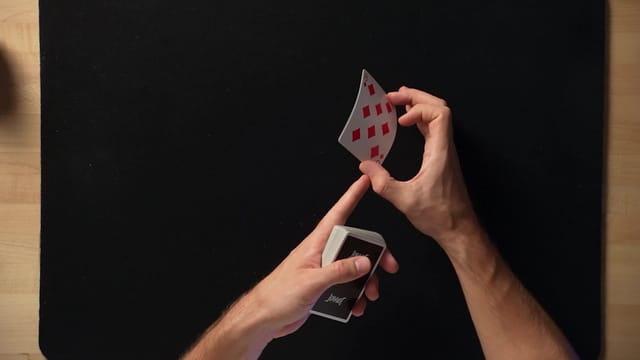
Duck Change: Mid-Air Card Transformation
Duck Change is a transformation that happens while a card spins in mid-air. Julio Ribera explains how to set up the handling and coordinate the toss so the change appears as a single action, ending on top of the deck.
Preparing the Gesture
The explanation begins by integrating a pinky break into the action of turning a card over. It covers how to transition from there into the grip required for the change.
Julio focuses closely on the grip and pressure. The tutorial distinguishes between the impulse that makes the card spin versus simply bending it without controlling the release. The goal of this explanation is to understand what needs to be coordinated, rather than trying to force the change through sheer strength.
Achieving a Coordinated Spin
The video points out a specific mistake: letting the material come out in two distinct steps, which causes the change to lose its instantaneous look. It explores the relationship between pressure, release, and sliding to address this issue.
Julio also mentions how sweaty hands can make the move more difficult. He suggests practicing the spin with a single card first and then transferring that feel to the full handling. Repetition is a key part of his practice advice, without promising any specific timeline for learning it.
Direction and Catch
The instruction covers the tilt of the card and the diagonal direction of the toss. Next, it works on having the spin travel back toward the deck and land squarely, so the catch naturally accompanies the moment of the transformation.
You will need a deck of cards, familiarity with setting up a break, and plenty of practice with the toss. The content breaks down the Duck Change and its adjustments for coordination, tilt, and the finish. It is not presented as an automatic effect: Julio insists on repeating the move and correcting the pressure until you achieve a smooth, synchronized release.