Out of This World: Triumph and Color Separation
The spectator shuffles the deck and witnesses two linked effects. First, the cards appear to be mixed face up and face down, ultimately ending up facing the same way. Afterwards, their choices regarding the colors lead to a separation of reds and blacks.
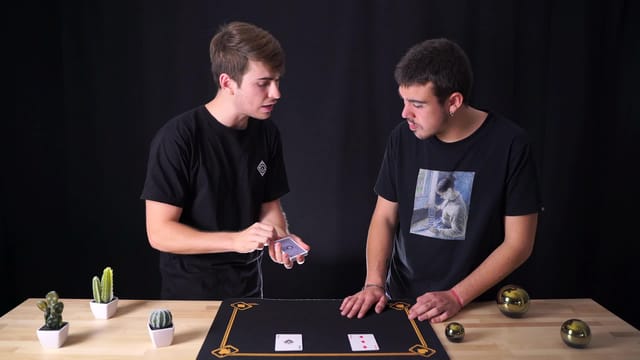
Julio Ribera performs and explains this version of Out of This World. The lesson includes the complete demonstration and a tutorial detailing the in-performance setup, the management of the piles, and the final revelation.
A Triumph as the First Phase
The first part uses the Triumph plot: an apparent mess of face-up and face-down cards that magically rights itself. Aside from producing its own strong effect, this phase sets up the deck for what comes next.
You will learn how to integrate the color setup into a sequence that seems to further mix the deck. The explanation covers the orientation of the packets, the direction changes, and the spreads that build this impression.
The starting point can be a deck shuffled by the spectator. The necessary stack is obtained through the handling explained during the performance; after this preparation, the magician continues to intervene in the sequence.
What the Audience Sees and Remembers
Julio accompanies the first phase with a story about his beginnings in magic. You can study this presentation or adapt the patter to your own performing style.
Part of the instruction focuses on directing the gaze, conversing, and creating a temporal distance between the actions and their outcome. It discusses when to leave the deck on the table and when to draw attention back to it.
It also explains how to take advantage of the natural bow of the cards and how to adjust the handling when that separation is not comfortable. The goal is for the technical actions and the spreads to maintain a consistent appearance.
Choosing Between Red and Black
In the second part, cards are introduced to serve as color references. The spectator indicates where they believe each card belongs, while the magician deals them into the various piles.
The explanation walks through the placement of these references, the transition between groups, and the continuation of the deal. It also touches on minor presentation details, such as an occasional check to reinforce the feeling that the participant is succeeding.
The apparent intuition is part of the experience. The lesson teaches the sleight of hand that makes it possible; it does not present the separation as a real psychic ability or as a procedure that happens without the magician's intervention.
Building the Revelation
The ending is structured so that the surprise builds progressively. Julio explains why he reveals some cards gradually and others all at once, and how to link the spreads so that each new group confirms the separation.
The handling of the final piles and the reference cards is thoroughly covered. These details are part of the routine and its clarity: the effect does not consist merely of dealing and turning everything over without regard for the order of actions.
The tutorial includes a recap of the whole routine to re-examine the relationship between the first effect, the setup, and the climax.
Materials and Practice
You need a standard deck and a table or surface for the piles. Julio removes the jokers in his performance and notes that they can also be used by treating them as black cards.
No special deck or commercial magic prop is required. The explanation breaks down the procedure for this version; it is best to practice packet orientations, spreads, and patter until you can talk naturally without losing control of the sequence.
Julio Ribera delivers both the performance and the explanation. Historical references to other courses do not add any materials, links, or necessary purchases to complete this lesson.