Card magic with Julio Ribera: predictions, coincidences, and productions

Thirteen lessons by Julio Ribera to build predictions, card travels, coincidences, and signed endings. The course combines handling, participation, and patter; several routines start with an ordinary deck, while others require props or specific preparation.
Card magic with Julio Ribera: predictions, coincidences, and productions
Thirteen lessons by Julio Ribera to build predictions, card travels, coincidences, and signed endings. The course combines handling, participation, and patter; several routines start with an ordinary deck, while others require props or specific preparation.
13 Lessons
Mobile Notes Prediction: Choice and Presentation with Two Packets
Pulse Reading: Key Card, Patter, and Revelation
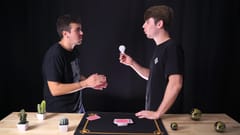
The Light Bulb as a Lie Detector: Force and Routine
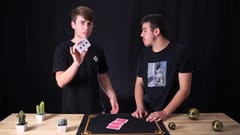
Four-Card Transposition with a Finish in the Spectator's Hands
Card to Box: Transposition and Vanish in Spectator's Hands
Instagram Prediction: Force and the Construction of the Impossible
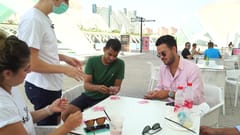
Poker Coincidence: Four Packets and a Shared Revelation
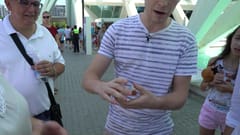
Cross Mind Connection: Coincidence and Card at the Named Number
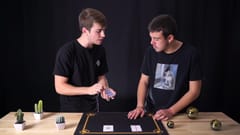
Out of This World: Triumph and Color Separation
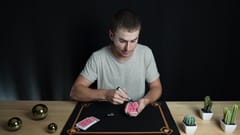
Gabi Pareras's The Fusion: Two Signatures on One Card
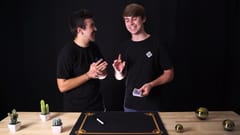
Card to Mouth: appearance of a signed selection
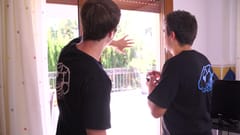
Card through Glass: Appearance on the Other Side
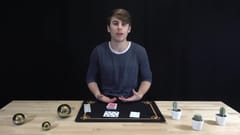
The Vanishing Ink: Transfer and Signed Card
This course brings together thirteen lessons on card magic taught by Julio Ribera. You will find predictions, apparent mind-reading effects, transpositions, coincidences between participants, and productions of signed cards.
The videos combine performances, explanations, and reviews to study how each effect is presented and what handling supports it. Some recordings revisit the same procedure: the overall content is organized into the thirteen lessons and their routines, rather than presenting each video as a separate method.
Prediction, Information, and Presentation
The course begins with a prediction in the spectator's mobile notes app. Julio explains how to set up the two packets, respond to possible choices, and weave the conversation into the revelation.
The second lesson uses the fiction of reading a pulse to locate a card. It covers the key card principle, peeks, cut conditions, and progressive narrowing down to the final card.
Next, a force applied to a light bulb that seems to act as a lie detector is studied. The explanation distinguishes the learning of the force from the prop required for that specific presentation, paying close attention to instructions and time misdirection.
Transpositions and Travelling Cards
The fourth lesson builds a transposition with a small packet of cards. It includes the prior control, displays, an out for a specific failure scenario, and two outcomes—one of them happening right in the spectator's hands.
The fifth lesson takes the selection into the card case using two approaches: a transposition with a special card and a card vanishing from a small packet that ends with the card reversed inside the boxed deck. Prop management, sleights, and the option to have the selection signed are examined.
Next, you will find a prediction featuring a prepared Instagram photograph. Julio covers the force, the timing for placing the card, and the premise of chance and choice, while also discussing the photo gallery as an alternative way to display the image.
Shared Coincidences
The seventh lesson proposes a poker coincidence using four packets distributed between the magician and three participants. The instruction covers forming the groups, dealing them, the instructions, and counting together towards a double revelation.
Cross Mind Connection places two spectators in the starring roles. The first phase produces a coincidence, and the second switches their roles to finish with a card at a named number. It covers the peek, fan force, controls, and counting, alongside the connection storyline.
Out of This World links a Triumph effect with the separation of red and black cards. The first phase sets up the next while seeming to add to the shuffle; the explanation details reference cards, the deal guided by the participant's choices, and the gradual revelation.
Signatures and Productions
La Fusión is based on an idea Julio attributes to Gabi Pareras, along with a subsequent adaptation. Two supposedly separately signed cards end up fused into a single souvenir bearing both signatures. The Double Lift, choice options, continuity of the displays, and the final outcome in the participant's hands are studied.
In Card to Mouth, attempts to find the selection lead to an unexpected production. The explanation applies a control and the Mercury Fold, and links the load to a conversation about the chances of success.
Card Through Window uses the window as the setting for the revelation. Julio breaks down the Top Palm, the cover for the movements, and the instructions for the spectator to hold the spread deck while he positions himself on the other side.
Ink and the Card That Retains Its Identity
The final lesson combines an ink transfer with a blank-face ending, except for the signed selection. The performance and tutorial share the same video and develop a narrative connecting both effects.
This routine uses a blank-face deck, an ordinary deck, a duplicate, and a deck switch. The kicker in the recorded version incorporates fire using the demonstrated tea-bag paper. The disappearance refers to the printing on the faces, not the physical vanishing of all the cards.
Materials and How to Study
Much of the course uses an ordinary deck, its card case, a marker, and space to lay out cards. Specific presentations add extra materials: a notes app or a prepared photograph, a rubber band, a contact magic light bulb, a window accessible from both sides, and the blank-face deck from the final effect. You can source these specific magic props at your usual magic shop.
Preparation varies between lessons. Some are built up during the performance; others require setting up an image, props, or cards before starting. Review the materials needed for each one rather than assuming all of them can be performed with a borrowed, impromptu deck.
It is advisable to know controls, breaks, the Double Lift, and the specific resources used in each routine. The explanations break down their applications, spectator participation, and presentation; references to prior sleights do not replace comprehensive courses on all those fundamentals.
Julio Ribera teaches the lessons. The patter themes of connection, pulse, suggestion, or energy are magic presentations: learning combines technique, effect construction, instructions, and audience management.