The One-Armed Man's Aces: A Two-Handed Alternative
An Alternative for Executing the Productions
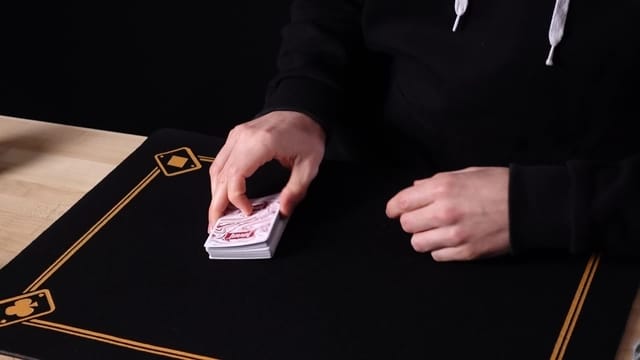
If the one-handed cut proves difficult, this lesson develops a two-handed version to continue studying The One-Armed Man's Aces. Julio Ribera combines a sliding cut with a sequence of false cuts that preserves the order of the cards.
The alternative requires knowing the arrangement of the aces for the routine; this lesson teaches the handling used to produce each appearance.
Understanding the Sliding Cut
The tutorial examines where the fingers rest and what work the thumbs perform when separating the packets. Julio distinguishes the support of the front fingers from the action used to open the cut.
He also explains the contact of the index finger and the coordination of the shift. The proximity of the hands and the continuity of the movement are part of the cut's overall look.
Adding the False Cuts
The second part develops a double cut on the table while maintaining a break with the thumbs. It demonstrates how to keep that reference point while moving the packets and how to recover the starting stack.
The video then combines these cuts with the sliding production. You will be able to follow the appearance of the first ace and the repetition of the sequence to continue with the rest.
Preparing for Practice
You will need an ordinary deck, a table surface for the cuts, and knowledge of the card arrangement for The One-Armed Man's Aces. It is best to study the break, the false cuts, and the production separately before linking them together.
Julio proposes this option as an easier alternative to the one-handed work. You can use it to progress in the routine and later compare the presentation of both ways to produce the aces.