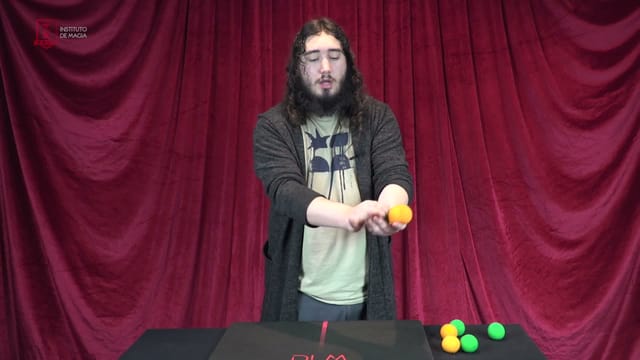
Hopping Sponge: two-color sponge balls
Two colors and a repeating question
The magician shows two balls of different colors, pockets one, and asks which one is left in the hand. The answer seems obvious, but both reappear. The situation repeats with variations until both vanish. Xulio Merino presents Hopping Sponge and explains how to build the sequence so the entire audience can follow along and participate.
The lesson first covers sponge ball displays: the addition, the exhibition, the drop, and the transfer to a closed hand. Compression, finger placement, and the exact moment the grip changes are studied separately. Handlings with different numbers of balls and their application within the routine are also shown.
The explanation pays close attention to specific errors: releasing the pressure too early, extending the fingers too much, or showing the hand from an improper angle. Vernon's false transfer completes the technical work and allows you to link the final moment with the vanish.
Comedy and participation
One presentation portrays a magician growing impatient because the audience seems unable to agree. In the other, the reappearances surprise the magician himself, who is unable to hold onto just one ball. Both stem from the same handling while changing the acting, pauses, and the way of responding.
It discusses how to listen and converse during close-up magic, and how to guide the responses of a larger group without losing the thread. The repetition of the colors makes it easy for children to understand the situation; adults can participate too. The explanation shows where to pause and where a display should be brief so the action keeps feeling natural.
Materials and preparation
You need four sponge balls, two of each color, and accessible pockets. The colors must contrast with each other, with your clothing, and with the background. The instructor compares two-inch and two-and-a-half-inch balls, adapting the pressure and hand span to the size of the props.
It is helpful to know the finger palm. The displays and the false transfer are broken down in the video; practice each transition first, and then combine the handling with the questions and reactions you wish to portray.