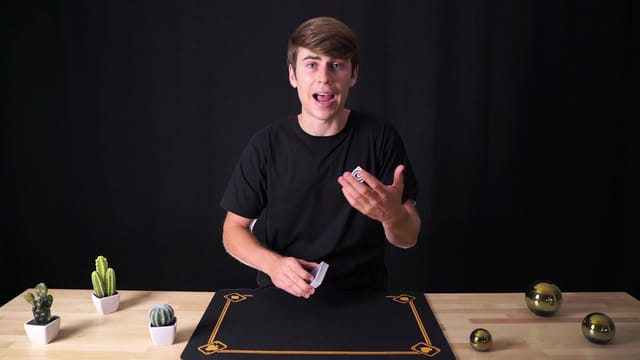
Classic Palm for cards: grip and naturalness
The classic palm allows you to keep a card hidden in your hand while performing other actions. Julio Ribera introduces its anatomy and a simple way to get into position, without attempting to cover the wide variety of palms that exist in card magic.
Finding the points of contact
The explanation begins with a card and an open palm. The two points that support the card are identified, along with the placement of the remaining fingers so the hand can maintain a relaxed appearance. Julio shows how to adjust the pressure and how to check the position from the front.
Card palming is linked to principles that are also used with coins: naturalness, hand symmetry, and the ability to hold an object while keeping another concealed. These concepts help study the posture as part of an action, rather than as a hand left motionless.
Reaching the position and practicing
The tutorial includes a two-handed entry from the top of the deck. The transition from holding the deck to the palmed card is explained, and the path is repeated to recognize the correct contact. The top palm is mentioned as another entry; a simple alternative is provided here.
To practice, Julio suggests keeping a card palmed while performing everyday gestures. The goal is to get used to the position and reduce the stiffness that can appear at first.
You need a standard deck. This lesson teaches the classic position, its basic entry, and practice criteria; it does not develop a complete vanishing or production routine, nor does it require a commercial gimmick.