Coin Types: Size, Grip, and Selection
Choosing a coin influences how it is held, its visibility, and the possibilities within a routine. José Arcario presents several standard formats and explains the criteria behind his work.
The lesson focuses on coins for technical handling. Gimmicked coins appear at the end as areas to explore, without detailing their mechanisms here.
Half Dollar and Dollar
The half dollar receives special attention due to its size and reeded edge. José relates this contour to the grip required by various palms and sleights.
Next, he compares the larger dollar coin. He discusses how the hand adapts when changing formats and the advantage of a more visible coin for certain parlor situations.
The choice also depends on the routine. The video uses Matrix as an example to explain how size can complicate working with multiple coins under a card.
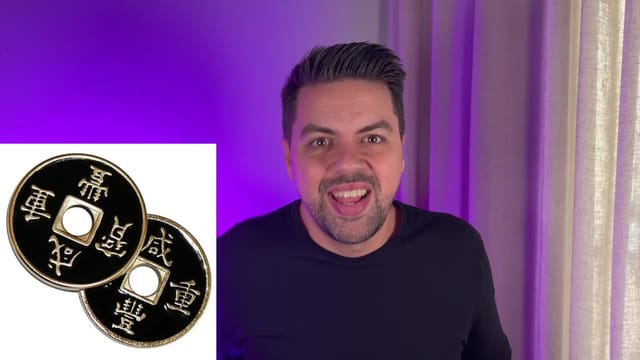
Chinese Coins
Coins with a central hole and a distinct visual appearance are introduced. The hole is connected to string routines and other construction possibilities.
José also comments on the attention this material can attract compared to a coin of another format. This is a matter of presentation as well as physical characteristics.
Jumbo Coins
The jumbo format is studied as a resource for a visual climax, for example when transforming a coin into a much larger one. Parlor or stage applications are also discussed.
A distinction is made between the function of a large coin as a concluding element and the difficulty of handling it within a technical sequence.
Sleights Before Expanding Your Arsenal
The conclusion mentions gimmicked coins, such as flipper or folding coins, along with references for further study. José's approach is to work on the fundamentals first and then assess which props add possibilities to your repertoire.
The instructor's preferences help explain his selection; they are not a requirement to buy all the formats shown.
To follow the comparison, you can observe the examples in the video. If you want to try them out, the task is to compare which size and edge suit your hand and the specific sleight you want to study.