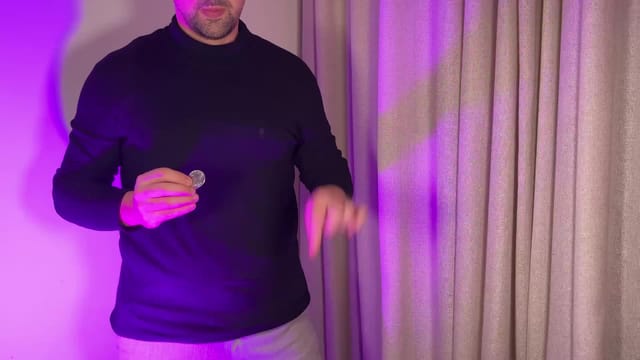
Visual Retention Vanish
The retention vanish aims to preserve a clear image of the coin during the apparent transfer. José Arcario explains the placement, movement, and coordination with the receiving hand.
The two videos include a commented slow-motion example and the technical explanation with close-up views.
Placement and Cover
The relative position of the index finger and thumb is studied, and how it facilitates the coin's path. The receiving hand acts as a screen during the retention.
The example offers an exposed view to follow the movement and discusses the difference from the cover required during performance.
The Last Image of the Coin
José highlights the importance of the coin being visible in the palm area before the closure. The coordination work links that image with the depositing gesture.
Two possibilities are explained: performing the sleight during the approach or doing it when resting the coin in the palm. The second is presented as an option to work on after becoming familiar with the technique.
Sound and Finger Gaps
The explanation mentions the potential clinking of the coin against a ring. That detail can produce sound and is factored into the evaluation of the sleight.
The cover of the gaps between the fingers, known as windows, is also addressed. The position must account for these spaces without turning the hand into an excessively rigid posture.
A Continuous Action
The example shows the hands, executes the false deposit, and continues toward the sleeve. Afterward, it adds a display and the vanish.
The instructor uses that sequence to emphasize justification: the hand frees itself because it is going to do something else. The retention is integrated into that objective.
Props and Practice
You need a coin and familiarity with finger palm. If you wear rings, the video suggests considering contact and sound when practicing.
The learning process brings together position, cover, coordination, and presentation. The slowed-down clip allows reviewing the details without attributing the complete result of the example to a single isolated action.