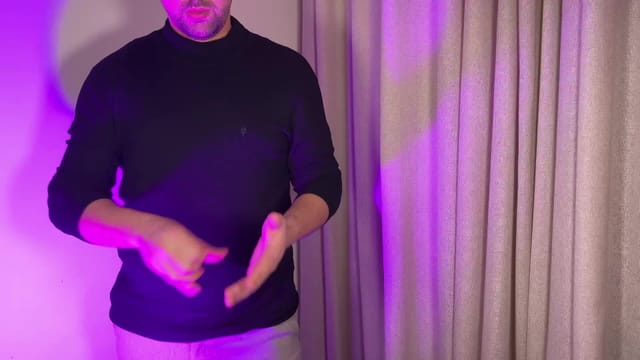
Downs Palm False Transfer
The Secret to a Natural False Transfer
Most people think a false transfer is just about moving a coin from one hand to the other. But the best ones happen because you’re busy doing something else, like rolling up your sleeve or picking up a pen. If you just move the coin for no reason, people get suspicious. When you give your hands a job to do, the "vanish" happens on its own.
Why the Downs Palm Changes the Move
Using the Downs Palm for a false transfer lets you show the coin pinched between your fingers right before it disappears. This grip looks very open and fair to your audience. Instead of just closing your fist, you use the natural motion of switching hands to move the coin into a hidden position. It makes the magic look like you aren't doing any "moves" at all. You'll be able to show your hand clearly empty while the coin is tucked away.
How the Downs Palm False Transfer Works
Jose Arcario walks you through the Nelson Downs false deposit step-by-step. He shows you exactly how to pinch the coin between your index and middle fingers and how to time the hand switch so the coin stays hidden. You'll learn how to angle your hands toward your body so your audience never sees the coin move into your palm.
Jose also explains the "why" behind the move. He teaches you how to use a second action—like reaching for your sleeve—to justify the hand switch. This makes the transfer look accidental rather than intentional. By the end of this lesson, you’ll have a specialized tool for parlor or stage magic that most amateur magicians never take the time to learn.
About Jose Arcario
Jose Arcario is an award-winning magician who competed at FISM 2022, the world championships of magic. He is an expert in micromagic and is known for his precision and timing with small objects.
What's Included
- How to pinch the coin between your index and middle fingers for the display
- The "swing" motion that hides the coin during the hand switch
- How to use your sleeve to justify why you're switching hands
- The correct hand angles to keep the coin invisible to your audience
- How to show your hand empty after the transfer is complete
- Tips for transitioning from the transfer into a vanish or a pocket dump
Frequently Asked Questions
Is this harder than a classic palm?
It uses different muscles in your fingers, so it might feel weird at first. However, Jose breaks it down into small steps that make it much easier to get used to the grip.
Do I need special coins for this?
No. You can do this with any standard coin, though most magicians find it easiest with a half-dollar or a similar sized coin.
Is this good for close-up magic?
It is best for parlor or "stand-up" magic where people are a few feet away. Jose explains how to manage your angles so it stays hidden even if people are watching closely.
How long does it take to learn?
The move itself is simple to understand. You can learn the mechanics in about ten minutes, but you'll want to practice for a few days to make the "swing" look smooth and natural.