Stage energy: attention, presence and body control
Recognize your state on stage
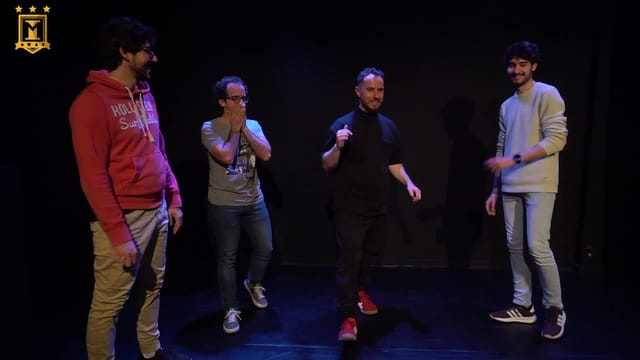
Gerard Clúa presents an adaptation of Lecoq's seven energies to work on the artist's body awareness and presence. The class combines explanations, exercises with participants and examples applied to close-up magic and stage magic. The purpose is to identify how you move, where you direct your attention and what you convey, so you can choose a suitable performance state at any given moment.
The session begins with a warm-up game that activates the body and the response to fellow performers. Then, the seven levels are reviewed and their differences compared. The numbering and names correspond to the adaptation that Gerard develops in this class.
The seven levels of work
- Absence of energy or "death". A collapse and recovery exercise introduces self-care, balances, fellow performers and the space. Emphasis is placed on observing the floor and recognizing obstacles before acting.
- Slow movement. Slow motion allows you to observe the body and coordinate gestures with the gaze. It is also proposed as a preparatory resource to concentrate before going on stage.
- Everyday disconnection. The state of performing mechanically, with your attention elsewhere, is identified. The examples show how a well-known routine can lose interest when the performer stops engaging in what they are doing.
- Gaze and close connection. Posture, pauses and eye contact are worked on to establish a relationship with a small number of people. The application is especially linked to moments of shared attention in close-up magic.
- Presence or stage weight. Stage entry, space occupation, listening and emotional involvement are explored. The intensity is supported by controlled movement and the relationship with the audience.
- Tension and loss of control. A deliberate fast action is distinguished from rushing, which causes a loss of attention, invading a fellow performer's space or neglecting props. The work consists of recognizing this excess and regaining control.
- Confidence. A collective exercise serves to discuss the willingness to act, trusting in the work done and remaining open to the audience. Gerard presents it as an attitude that accompanies the entire performance.
Applying it to your routines
The demonstrations allow you to compare the same movement with different postures, rhythms and intentions. It is discussed how to pause a routine to look at someone, how to hold a presence before a room and how to give meaning to a line or a gesture. The class also distinguishes between portraying a chaotic situation and genuinely losing control of what you are doing.
Examples of musical routines, manipulation and close-up magic illustrate these ideas; the main teaching is theatrical. The anecdote about Maria Callas's entrance is used as a reference for presence, without turning it into a singing exercise or vocal training.
Practice, space and preparation
You need a clear space to move around. Part of the work can be explored individually; the dynamics of chasing, gaze, interaction and confidence are shown with fellow performers. There are exercises that involve going down to the floor and getting back up, so body care, balances and the people around you are an explicit part of the explanation.
It is advisable to do the warm-up before the dynamics and work within your movement capabilities. To apply the concepts to magic, use a routine you already know and observe what changes when you vary your attention, gaze and intensity. The session ends with a review of the seven levels to help you recognize them during rehearsal.