Magic for Birthdays and Family Celebrations
Preparing a Performance for a Family Celebration
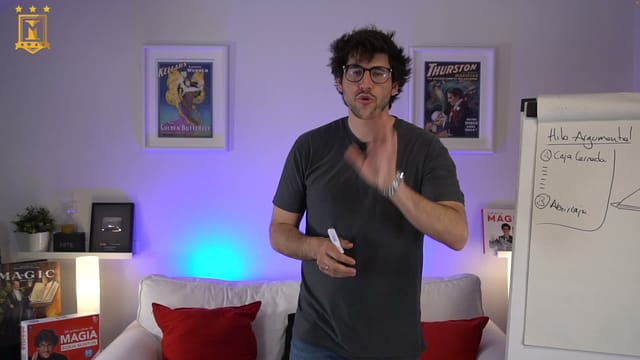
Borja Montón shares his experience organizing shows for birthdays, first communions, weddings, and baptisms. The class covers the preparation and presentation decisions surrounding the tricks: what story to tell, how to alternate effects, where to perform, what equipment to bring, and how to interact with children, adults, and venue staff.
The approach distinguishes a primarily children's party from a celebration with a wide age range. The repertoire and participation must respond to the real audience, without leaving adults out or losing the attention of the little ones.
A Simple Narrative Thread
Learn to give direction to the show through an initial objective and a final resolution. Borja uses the example of a chest that needs to be opened and several magic words discovered during the show to explain how to connect different effects.
The clarity of the mission is worked on, alongside the starring role of the child celebrating their birthday or communion and the possibility of introducing a conflict to maintain interest. Other story ideas are also proposed, such as gathering elements to complete a superhero transformation. These are examples to develop your own plot, not a closed script you must reproduce.
Repertoire Order and Variety
Analyze a sequence used by the instructor: an energetic entrance, an effect with a surprise finish, collective participation from the seats, spectator intervention, a trick that connects with adults, a musical break, and a new surge of energy before the finale.
The explanation shows how to alternate rhythms and forms of participation. He discusses effects such as Pass-Pass Dice, sponge balls, the invisible deck, banknote travels, the floating table, Rocky Raccoon, Coloring Book, jacket escape, and Chinese snow. Their potential function within a show is studied; the methods or complete routines for these tricks are not taught here.
The repertoire described belongs to a stage in his career and serves as a case study. The intention is for you to select effects you know, that adapt to your style, and that work under the conditions of each celebration.
Space, Visibility, and Audience
Review how to analyze a room before setting up: waiter circulation, guest traffic, performance backdrop, available lighting, and sightlines. The usefulness of a folding backdrop is explained to define the space and provide a preparation area.
It also addresses where to place the children, how to delimit the work area, and what to keep in mind so adults can follow the magic from their tables. The setup must facilitate the performance and coexist with the activity of the restaurant or party venue.
Equipment, Transport, and Preparation
Compare briefcases, suitcase tables, and table stands, and explain how to group the material for each effect to streamline setup, pack-down, and preparation for another show. The condition and appearance of these items are also part of the presentation.
Planning includes arriving with time to spare, introducing yourself to the room manager, and agreeing on how to avoid mutual interruptions. Requirements such as a changing area, power outlets, extension cords, and access to water when the repertoire requires it are reviewed. These are criteria for organizing your show's equipment, not a mandatory shopping list.
Sound, Music, and Lighting
The use of a speaker, microphone, and battery-powered equipment is discussed, as well as the convenience of adapting the sound to the space. Borja explains the idea of preparing musical cues and controlling them with a remote, or working with someone in charge of the technical side.
Go Button and QLab appear as references to understand these music control possibilities; their step-by-step configuration is not covered. Lighting is approached according to the needs and practicality of the setup, prioritizing that the audience sees and hears well.
Participation, Finale, and Client Relations
The instructor suggests connecting with the interests of the child audience, giving them simple responsibilities, and redirecting interruptions without turning them into a confrontation. He explains when to kindly request the parents' cooperation and how to acknowledge positive participation.
The finale must resolve the premise established at the beginning and provide a clear sense of closure. Souvenirs for the guest of honor, family feedback, and testimonials are also discussed. Emphasis is placed on asking permission to record and respecting privacy when using performance footage.
What You Need
You can follow this theoretical class without specific props. To apply his criteria, it is useful to know a few tricks you have already mastered and to think about a specific audience and space. You do not need all the tricks or equipment mentioned: your selection depends on the show you want to prepare.
The session lasts approximately 52 minutes and combines personal examples with organization and presentation recommendations. Physical props are not included.