Soap Bubbles and Smoke in Stage Magic
Choosing the special effect for each moment
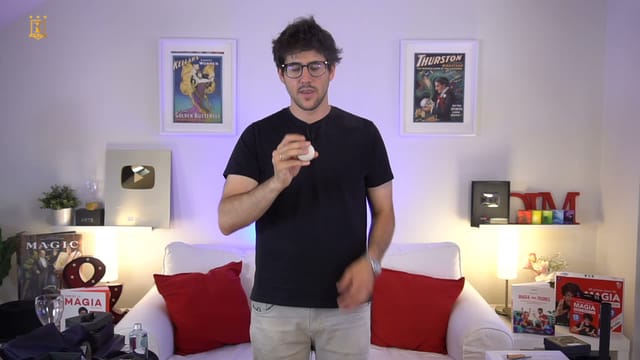
Borja Montón explains how soap bubbles and smoke can accompany a production, a transformation, or the atmosphere of a show. He combines studio demonstrations with a visit to the theater to compare small effects, controlled by the magician, and machines that work across the entire stage.
The class helps you understand what each resource brings, what equipment it requires, and what practical issues are worth anticipating. The focus is on choosing and using the material; it does not develop a full bubble routine or a closed smoke magic act.
Soap bubbles: liquid, environment, and surface
The differences between commercial liquids and homemade mixtures are discussed, along with liquid preservation and how humidity affects a bubble's lifespan. The instructor demonstrates smoke-filled bubbles using an SB Tube and mentions other stage possibilities, such as giant bubbles or machines that produce many at once.
He also explains why a brief effect and a full bubble act present different needs. Soap falling on the floor can leave a slippery surface; it is recommended to protect the work area with a cloth or towel and plan for its removal. The amount of liquid and its reach toward the audience determine where using this resource makes sense.
Losander's floating bubble appears as an artistic reference, not as a routine whose method is taught here. Nor is a formula with exact proportions for making the liquid provided.
Portable smoke and props
The comparison of small devices focuses on their size, smoke output, noise, battery life, and ease of integration into the performance. Borja showcases Lukas's Smoke Grande and a compact unit with various accessories, explains its basic operation, and comments on differences he has noticed while using them.
Applications with a glass and a silk, a chest, and production or vanish effects are shown. These examples allow you to evaluate the smoke's exit direction, the use of tubing, the placement of the device, and activation via a remote or with the help of a technician.
He also shows a device that combines the transformation of a silk into a ball with a puff of smoke. He uses it to point out a specific limitation: a mechanism that is acceptable with music might become audible during a silent moment. This demonstration does not turn into a ball manipulation lesson.
Preparation and maintenance
The care of consumables, inspection of heating elements, and battery preparation before performing are explained. The instructor links various failures to repeated use of the device without checking its condition and shares his experience with equipment that required repair.
The brands and reviews correspond to the material shown in the recording. What is compared is its practical utility for a specific stage situation, without the need to acquire all the models mentioned.
Dense smoke and haze for lighting
In the theater, a fast-dissipating dense smoke called Quick Fog is demonstrated for specific moments like a production. Afterward, haze from a hazer is shown, which lingers in the air and makes light beams visible. Ventilation and output power are taken into account when deciding on the desired result.
CO₂ is also mentioned as another possibility, without delving into its installation or handling. The conclusion reminds us that the use of smoke must be communicated and coordinated with the venue, keeping its detectors and alarms in mind.
Materials and requirements
You do not need advanced manipulation skills to follow the explanation. Practicing with bubbles requires liquid, a bubble wand or tube, and proper surface protection. Smoke demonstrations require specific equipment along with its accessories and consumables; stage applications also require a venue prepared for their use.
The recording lasts approximately 27 and a half minutes. It includes comparisons, demonstrations, and criteria for using bubbles and smoke; it does not include teaching fire effects.