Magic Character: Killer, Victim, and Witness
Choosing how your character reacts to magic
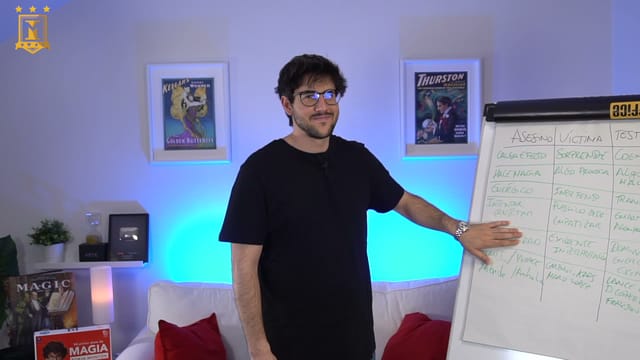
Borja Montón develops a framework of three stage roles: killer, victim, and witness. These are figurative names to describe the magician's relationship with the effect, not themes you must literally portray. The lesson compares their characteristics through a table, performance examples, and analysis exercises for your own repertoire.
The main question is who seems to produce the magic and how the character responds when it happens. That choice influences the gesture, energy, relationship with the audience, and emotion conveyed by a presentation.
Three roles and their demands
- Killer: the character causes the effect. They show awareness of their power and present magic as the result of their action. Borja relates this role to a marked energy and the need to connect with the audience so the display of skill is not perceived as arrogance. He also discusses the expectations created by announcing what is about to happen.
- Victim: the effect surprises the character. Something happens outside their apparent control and the magician reacts to it. This can lead to vulnerability, comedy, and complicity. The difficulty lies in maintaining a credible performance and making the spectator care about what is happening.
- Witness: the character accompanies what happens. They observe and share the magic with the audience from a calmer attitude, without acting out the victim's surprise or constantly emphasizing their own intervention. Presence, energy control, and the feeling of companionship are worked on.
The card to pocket serves as an initial example to compare different reactions to the same outcome. Its presentation is analyzed, without explaining the method of the trick.
Recognizing roles in a performance
It is proposed to identify which attitude you feel most comfortable with and write down two or three magicians you would associate with each role. Afterward, Borja discusses references such as Juan Tamariz, Cardini, Fred Kaps, Lance Burton, and David Copperfield. The discussion about René Lavand shows that the classification allows for nuances and depends on how a performance is interpreted.
The examples express the instructor's reading of certain styles and acts; they do not pigeonhole each artist into an invariable category. The class cites Foundations by Eberhard Riese as a reference for the framework.
Combining styles without losing coherence
The same character can use different roles throughout a show. Borja explains how he alternates a display of power, comic moments, and apparently inexplicable situations depending on what he wants to communicate. He recommends starting with a main style and exploring another that complements it.
The criterion is to keep the reaction to each effect clear: if the character claims to control everything, an unjustified surprise can contradict that intention. The rings, torn and restored cards, object travels, and predictions are mentioned to explain these decisions, not as taught routines.
Application to your repertoire
You need paper and a pen or a document to build the table and take notes. The final exercise consists of reviewing effects you already know, identifying the role you are adopting, and checking whether your reactions convey your chosen intention.
No specific magical props or advanced sleight of hand are needed to follow the explanation. To put it into practice, it is useful to have a known routine and rehearse different presentations without changing its method.