Street Magic: Repertoire, Transitions, and Passing the Hat
Organizing the Show and Passing the Hat
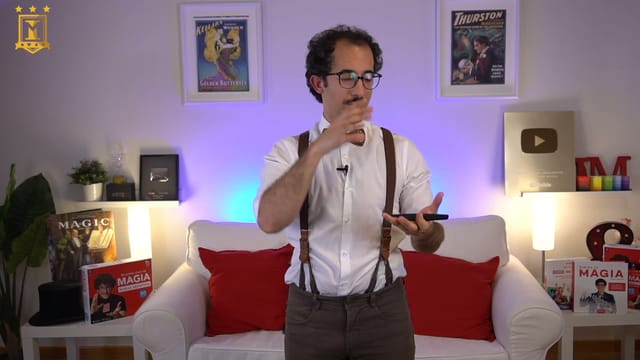
David Navares explains how to choose and order the repertoire for a street show, link your routines, and ask the audience for financial support. The class covers both the hat pitch and the process for collecting contributions, featuring presentation examples and commentary based on his own experience.
Choosing and Ordering the Tricks
Specific street magic criteria are examined: controlling viewing angles, using easy-to-carry props with strong stage presence, and looking for effects with high audience participation potential. The instructor discusses classics like the Cups and Balls, ropes, Linking Rings, Bank Note to Lemon, and the Miser's Dream to explain their characteristics as repertoire.
Using his own show as a baseline, he proposes an opening with multiple effects, an especially strong routine right before passing the hat, and a finale that leaves the audience wanting to stay. He analyzes how to announce this closing during the performance and how to position each routine according to its function. The tricks and a straitjacket escape serve as examples; their methods are not taught.
Linking Routines Without Losing the Audience
David develops the concept of «riding» the tricks: introducing elements of the next routine while the current one is still underway. An example using sponges and ropes demonstrates how to distribute props, hint at what is coming next, and use the applause to transition smoothly.
The goal is to avoid dead air without clear action and give the audience reasons to stay. The explanation focuses on presentation, continuity, and attention, rather than the secret handling of sponges or ropes.
Building Your Own Hat Pitch
Passing the hat is presented as part of the show. The lesson covers balancing humor and seriousness, speaking naturally about your own work, and making a call for contributions that respects those who cannot or do not wish to give.
The pitch is structured around five questions:
- What: announcing that you are going to pass the hat.
- Who: introducing yourself and explaining your relationship to this work.
- Why: expressing the reason why you are asking for support.
- How much: giving guidance on contributions using references that the audience can easily relate to.
- How: explaining the manner in which you will collect them.
David shares his own pitch and explains how to rely on clear ideas without reciting them mechanically. A clip of Chacovachi illustrates the alternation between jokes and serious moments; another example highlights the negative effect of scolding the audience for what they contribute. The amounts mentioned are part of these examples, not a set fee you must adopt.
Collecting Contributions and Maintaining the Performance
Passing the hat must also have rhythm. The lesson explains how to keep talking, thank the audience for their contributions, and move through the rows without rushing or dragging out the wait. Hand-to-hand collection is compared with the option of leaving the hat available afterward.
It also covers how to anticipate this moment during the show, remind the audience that the grand finale is coming up, and wrap up by thanking them for their participation. Advice is given on how to handle latecomers who arrive just for the final trick and how to provide a cashless contribution option, illustrated with Bizum.
Preparing the Work and Learning from Each Show
The closing section brings together tips on getting along with other street performers, image upkeep, transport, and equipment maintenance. It includes preparing a kit for minor repairs, planning your route, and reviewing location conditions.
It also addresses using a sign with your name and contact info, handling potential bookings after the show, and keeping a log of things to improve. Performing with a partner and sharing observations is suggested as a way to get feedback and tackle your first shows.
Requirements and Scope
You can study these concepts without any special props. To apply them, you should already be familiar with a few routines, have their props ready, and prepare a hat or container, visible contact info, and a performance log. You do not need to buy the effects used as examples.
The recording is approximately 39 minutes long. This is a masterclass in structure, presentation, and working the hat, not a technical tutorial for the mentioned tricks. The final bibliographic references are provided for further study and are not included materials with the lesson.