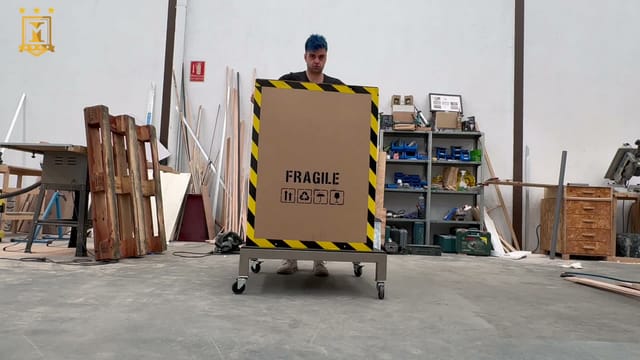
Flying Box: Floating Box, Handling, and Maintenance
Performing a Floating Box on Stage
Orbit and Borja Montón analyze the Flying Box using a pre-built apparatus. The lesson explains how the box, its base, and the performers' work combine to create the float, and what decisions make the assembly look like a recognizable shipping crate. It includes handling demonstrations and a review of measurements and components; it is not a complete step-by-step manufacturing guide.
Naturalness and Approach to the Effect
The instructors compare potential musical and spoken presentations. They discuss using the box beforehand for a routine action, such as producing everyday objects, before introducing the magical effect. Borja suggests producing a large object first and saving the person production for the climax. These are ideas for building your own presentation, not a rigid script or a complete stage routine documented in the class.
The coherence of the exterior look is also examined: the cardboard, packing tape, decoration, and cart must match what is being portrayed. The choice of the base is related to its visibility, transport, and available space, rather than treating it solely as a decorative element.
Apparatus, Proportions, and Comfort
Orbit disassembles and displays the components of his model to explain their function and transport. The structure, joints, locking casters, and the balance of the whole assembly are reviewed. The conversation highlights real-world issues with flexing or tipping encountered when using other apparatuses, and the importance of build quality.
The lesson examines how to relate the cart's height, box dimensions, and workspace to the performers' height and mobility. Positions are also compared, emphasizing that the person participating in the illusion must be able to get comfortable and move fluidly. Finally, measurements of the present model are taken to illustrate these relationships. These are references for that specific apparatus, not universal dimensions or stress calculations.
Box, Access, and Handling Options
The explanation covers the heavy-duty cardboard, frames, detachable joints, and gripping options. Differences between a top exit and variants with another opening are discussed, as well as the compromise between accessibility, freedom of movement, and the rigidity of the box.
An adaptation for a more pronounced tilt move is also mentioned. Orbit clarifies why he does not include it as standard for all boxes: modifying one part can affect its strength. The lesson analyzes these decisions on the equipment shown, without providing blueprints, cutting templates, or complete welding instructions.
Movement, Wardrobe, and Sightlines
Demonstrations show how to lift, orient, and move the box, explaining the coordination needed to make it look like it's floating. The work relies on the timing between both performers, the positioning of the presenter, and the capabilities of the apparatus. Knowing the mechanism isn't enough: entrances, exits, and transitions must be rehearsed as a sequence.
Long trousers, the relationship between wardrobe and set elements, and lighting conditions are discussed. For venues with side boxes or elevated audiences, an additional coverage option is explained. The instructors recommend recording rehearsals from various sightlines to check what the audience will actually see; it is not presented as an illusion that automatically works from every angle.
Maintenance and Requirements
The class dedicates a block to wear and tear during transport and performances: caster function, cardboard condition, paint, finishes, and visual consistency. A distinction is made between aging that might be part of a weathered aesthetic versus damage that impairs handling or presentation.
To practice the effect, you need a Flying Box apparatus suitable for stage use, a compatible box, rehearsal space, and a partner prepared to work with that equipment. The model shown uses an iron and wood base, locking casters, and a heavy-duty cardboard box with frames; entrance, grip, and finish options depend on the version. A phone or camera is useful for reviewing rehearsals.
The content is aimed at those already working with grand illusions or who need to understand the requirements before adding one. Building a structure to support people requires knowledge and testing that this explanation does not replace. Complete blueprints, apparatus, accessories, or a backing track are not included.