Dove Production
Preparation and production with silks
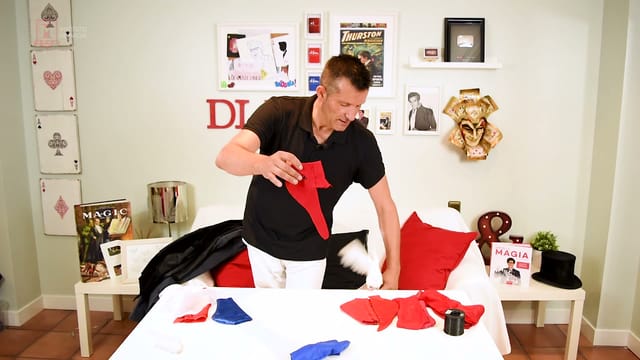
Riversson develops the stage work of dove productions, featuring a primary application performed with silks. The class combines demonstrations, material comparisons, and an explanation of two technical variants to adapt the handling to different hand actions.
Following a historical introduction, the preparation of the birds, wardrobe, accessories, and conditions influencing the work are addressed. The goal is to understand the set of decisions that allows integrating the production into a natural stage action.
Choosing and preparing the material
Different holders are compared regarding their shape, opening, resistance, and comfort of use. The explanation relates their choice to the condition of the feathers, the possibility of snags, and the ease of loading and releasing the bird.
A model designed by the instructor and its combination with silks are presented. The vest, alternatives for adapting a jacket, and the adjustments necessary for the wardrobe to accompany movements without hindering them are also studied.
The quality and fit of the equipment are evaluated by their practical performance, not just by their appearance or price.
Two handling variants and direction of attention
The main section works on two loading methods, using the thumb and using the pinky, and explains when each resource might be more practical. The natural position of the hands, finger coordination, and the movement to receive the bird are compared.
The demonstrations first isolate the actions to study them and then connect them with the handling of the silks. The gaze, the timing of picking up an object, and the continuity of the gesture serve to direct attention.
Emphasis is placed on rehearsing without visually searching for the working positions and on adapting the material to one's own body and dominant hand. The explanation distinguishes study conditions, with part of the wardrobe removed, from performance conditions.
Apparatus and other possibilities
Examples of a dove pan, book, and dove production frame are shown. They help compare production via an apparatus with the manipulative presentation developed in the class.
Steals and flash paper productions are cited as possibilities for further development. Lecture notes and return training are mentioned as supplementary material; they are not part of the complete practical instruction of this recording.
Material, rehearsal, and working conditions
To follow the main application, you need doves, suitable holders, silks, and a prepared vest or jacket. The class shows the components and adjustments of the outfit; having appropriate housing and means of transport to care for the birds is also required.
The instructor suggests starting rehearsals with paper or fabric reproducing the bird's volume, moving on to work with the live bird afterwards. Heat, waiting times, feather care, and transport conditions are covered as part of the preparation.
This is a specialized practice that demands coordination, full wardrobe rehearsals, and continuous animal care, in addition to learning the effect.