Magic as an Art
From Wonder to the Art of Illusionism
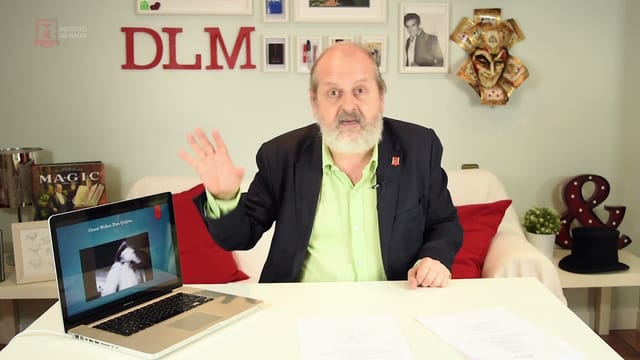
Ramón Mayrata examines how the interpretation of magic shifts when effects begin to be understood as the result of the artist's ingenuity and knowledge. His presentation connects the development of rational thought with a new function of the show: temporarily restoring the sense of mystery to the audience.
The printing press, the spread of the deck of cards, and books on gaming help contextualize this shift. Examples associated with Luca Pacioli and the earliest written repertoires are presented, alongside the relationship between card magic, gambling, and mathematical knowledge.
Artists, Literature, and New Performance Spaces
The lecture covers street and fairground performances, the entry of magicians into royal courts, and the presence of illusions in literature. Mayrata discusses figures such as Dalmau el Tortosino and Girolamo Scotto, focusing on their repertoires and methods for building anticipation among the audience.
Several passages from Don Quixote allow for an analysis of the relationship between fiction, belief, and the discovery of artifice. Learned animals, cabinets of curiosity, and fairs are also discussed as places where audiences encountered novelties and demonstrations of skill.
Science, Images, and Phantasmagoria
The camera obscura, the magic lantern, and mechanical apparatus illustrate the exchange between scientific discoveries and the creation of illusions. The presentation lingers on Kircher's world and the dissemination of images by lanternists, linking it to an expansion of the audience's visual experience.
Drawing on examples associated with Comus, Guyot, and Pinetti, Mayrata analyzes the close relationship among apparatus makers, popularizers, and illusionists. The controversy between Pinetti and Decremps introduces the issue of revealing secrets and making scientific knowledge accessible.
The journey concludes with phantasmagoria and specter performances. Mayrata connects these shows to the tensions between reason and belief, the revolutionary context, and the expression of collective fears. References to Philidor and Madame Tussaud form part of this interpretation of the spectacle and its relationship with later forms of entertainment.
The content invites viewers to understand the cultural significance of the practice of illusionism and to use its history as a source of reflection on their own presentation.