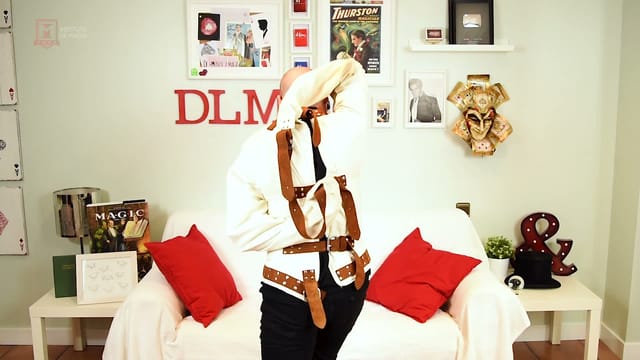
Straightjacket Escape
Building a Stage Escape
Vituco performs the straightjacket escape and then explains his version using a garment prepared for magic. The study focuses on standing performance: how to show the material, work with an assistant, and turn the release into a sequence that is easy for the audience to follow.
The class combines a demonstration, material analysis, and a guided practice. This second run-through allows for reviewing questions about fit and handling while another person tries out the movements under the instructor's guidance.
The Garment and Its Handling Conditions
Materials, sizes, strap types, and differences between models are compared. The lesson explains how fit and roominess influence the possible variations that can be used, and how the number of straps changes the flow of the performance.
The jacket used in the recording is small and limits one of the discussed movements. That difference serves to study why one must know the specific garment and adapt the handling, rather than assuming all jackets allow the same sequence.
The assistant's cooperation is also covered: giving clear instructions, checking that the fasteners are secured properly, and watching out for any issues during the strapping up.
Choreography, Effort, and Climax
The explanation connects the order of handling with what the spectator perceives. Work is done on presenting the restraint, portraying the effort, body positions, and choosing the moments worth highlighting.
The contrast between an initial phase of tension and a faster, more defined finale is studied. The pacing must allow the audience to follow the progress of the escape and clearly understand when it has been completed.
The final dialogue addresses the consistency of the routine: what a dramatic addition contributes and why it should reinforce the escape rather than compete with a different effect.
Material and Practice
You need a garment prepared for stage escapology, of a size and with characteristics suited to the handling you are going to study, along with help for putting it on and rehearsing. The class explains the built-in feature of the model shown and discusses other commercial solutions.
This is expert-level content. It requires knowing the behavior of your specific garment, rehearsing a repeatable choreography, and reviewing fits and potential situations with assistance.
Versions involving water, suspension, or other added risks are mentioned as possibilities and different conditions; their setups are not covered in this lesson.